
Last updated November 16, 2026
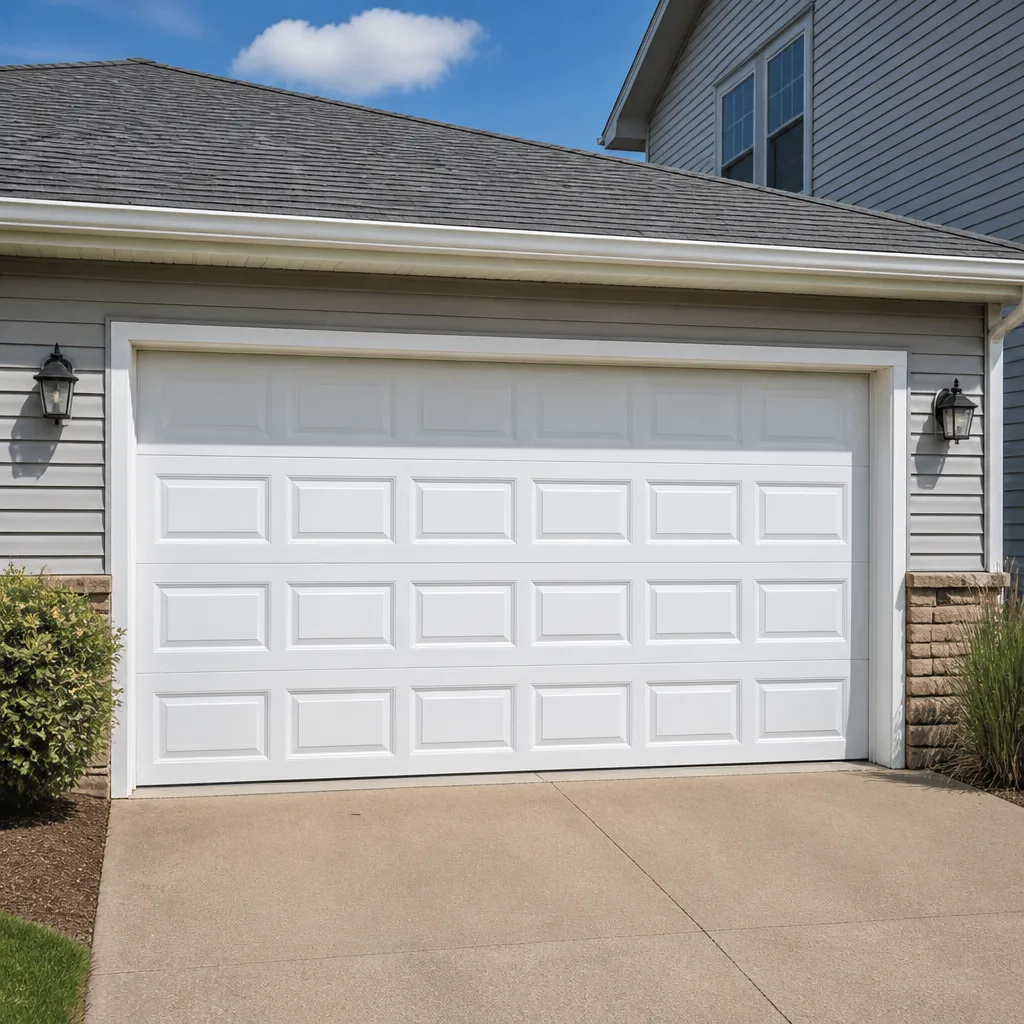 Raised-panel steel
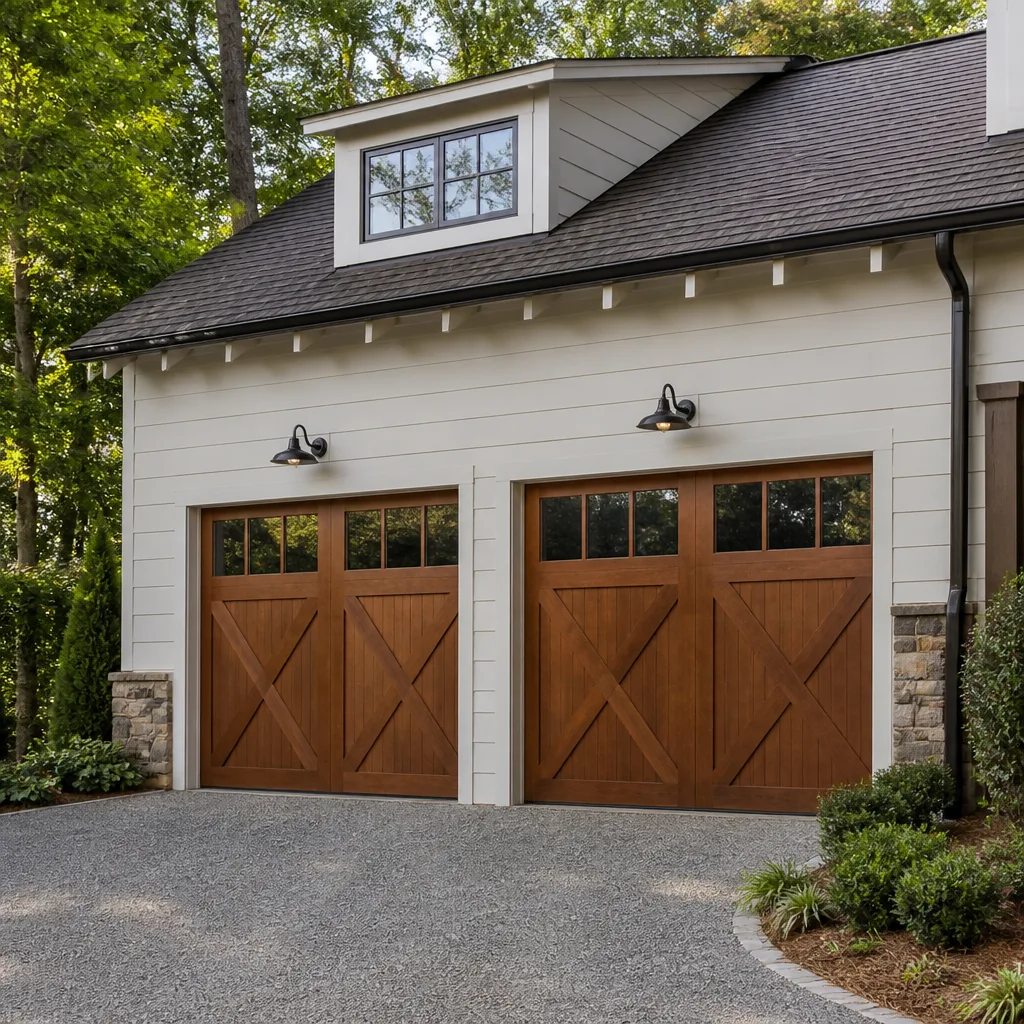 Carriage house
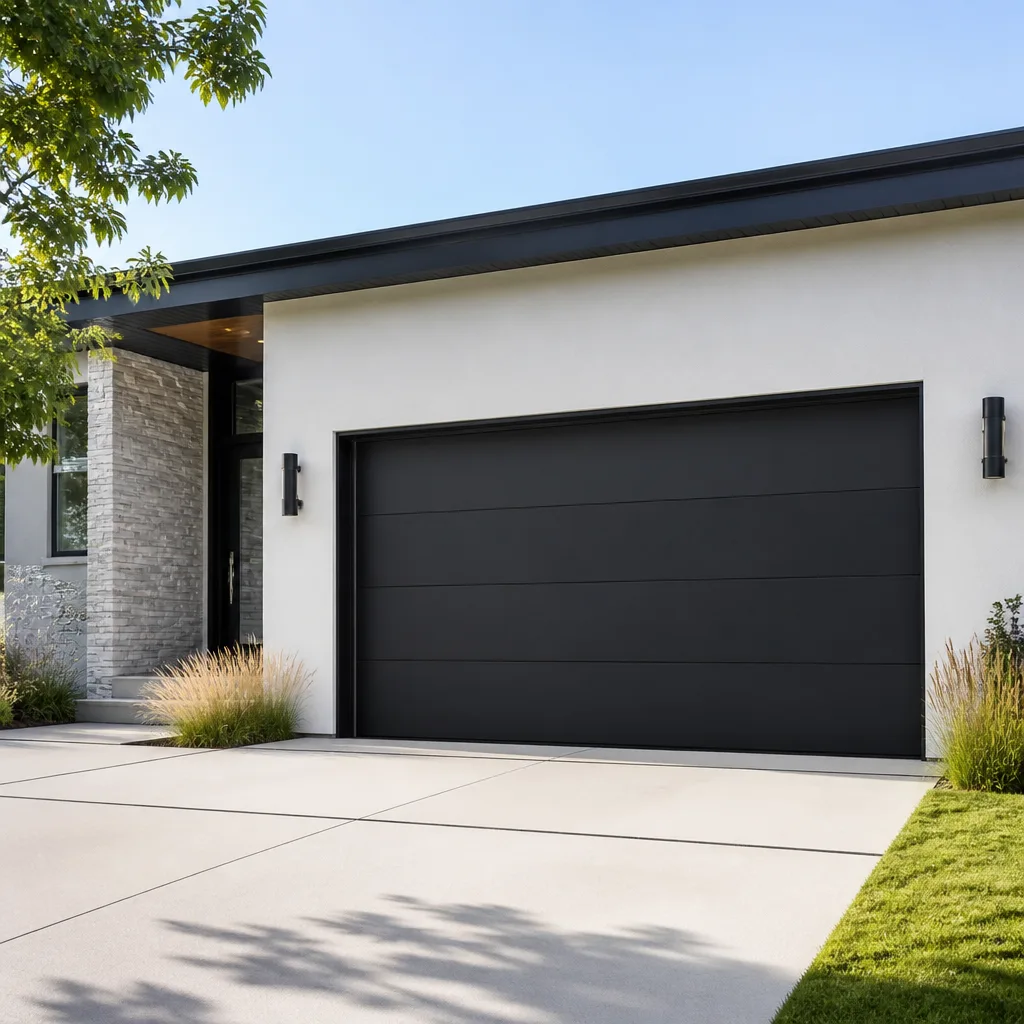 Modern flush
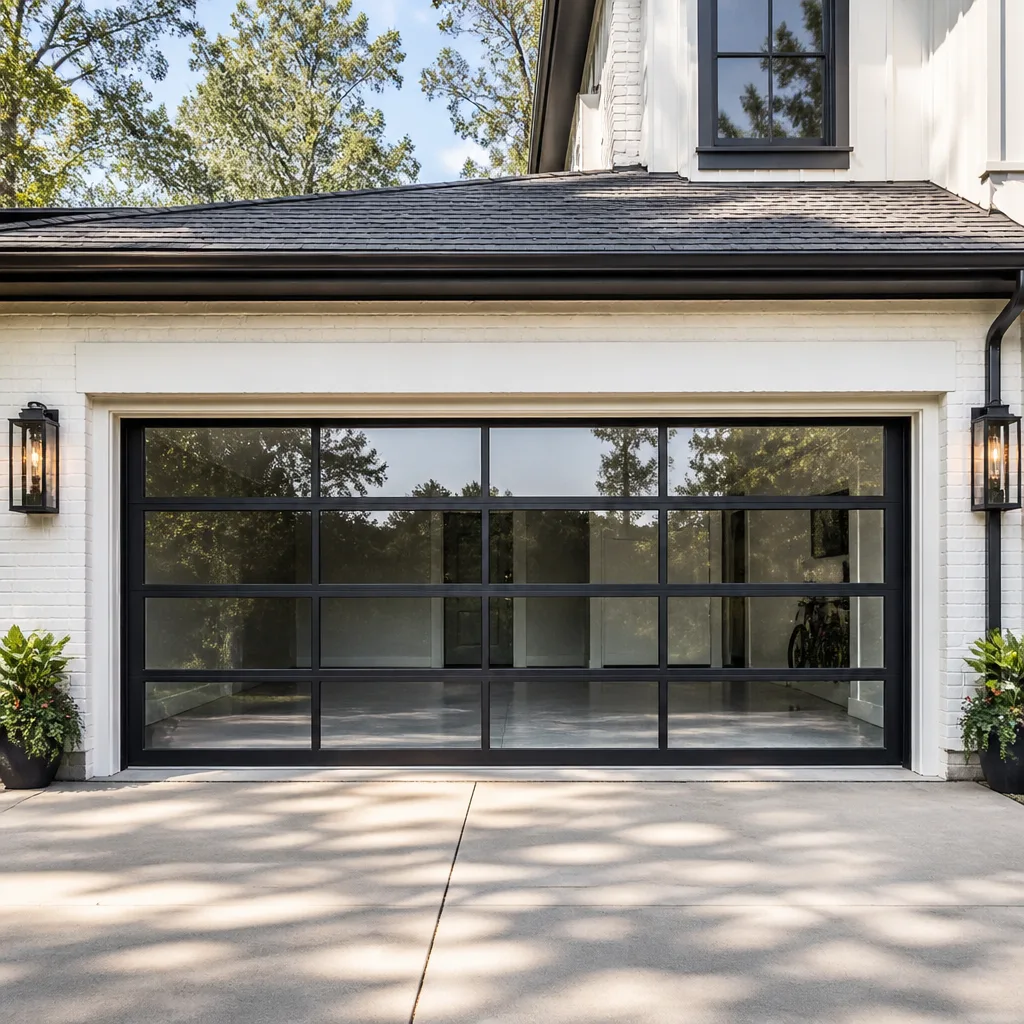 Full-view glass
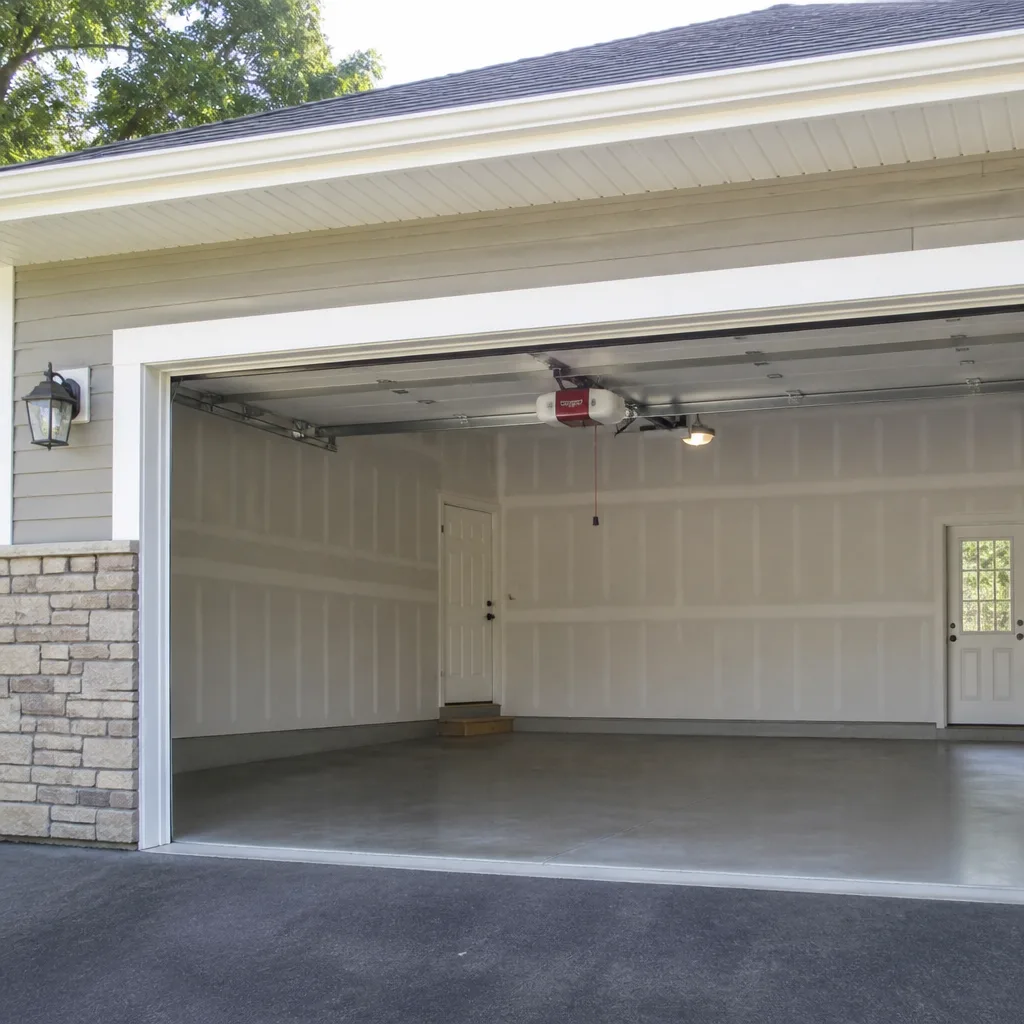 LiftMaster openers
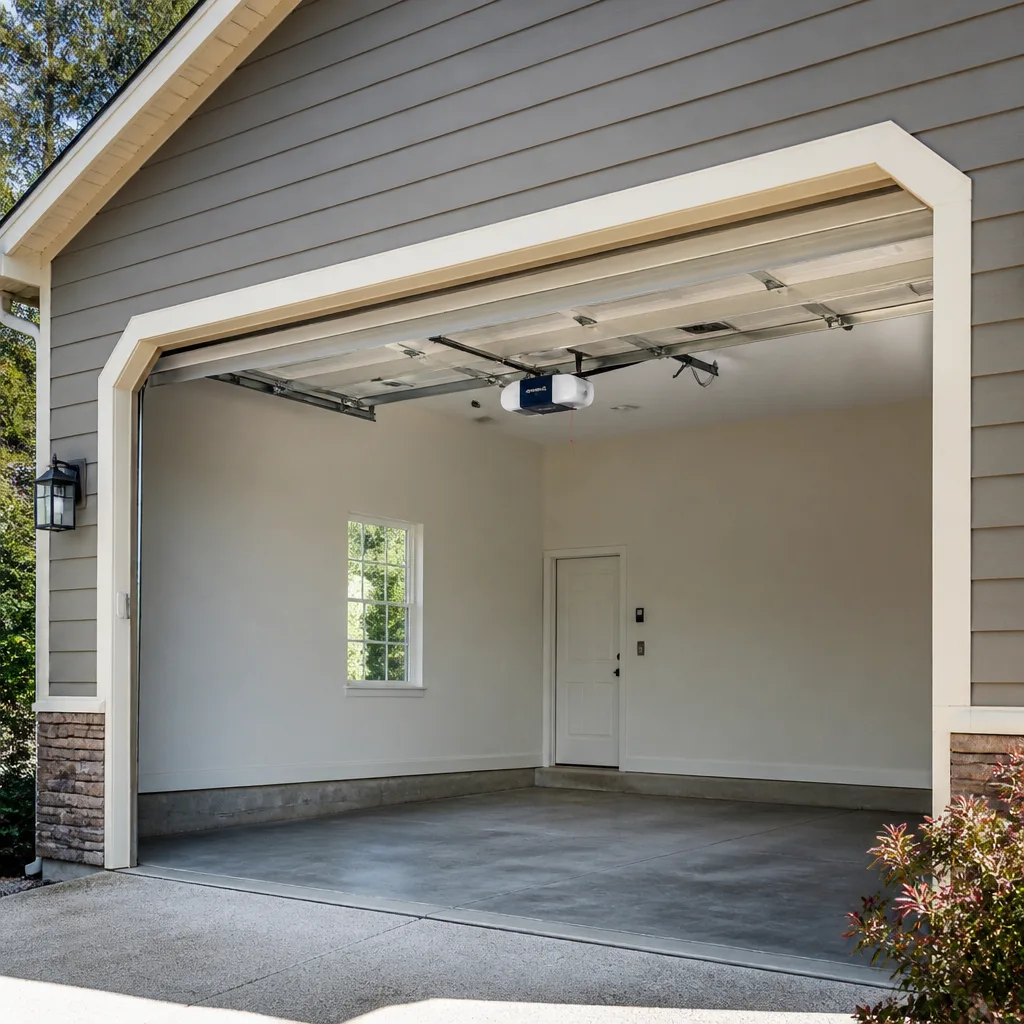 Chamberlain openers
Full 25-point door and opener safety check with every visit - springs, cables, rollers, tracks, and your LiftMaster or Chamberlain opener included
You get a price before we start. It does not change when the pro arrives.
Get your free estimateSeasonal Garage Door Care for Norman: Year-Round Homeowner’s Guide
Most seasonal garage door guides tell you to “winterize in October” and call it done. That advice was written for a climate with four gentle, predictable seasons. Norman doesn’t have that. February here can hand you 75°F sunshine and an ice storm inside 48 hours, and July can push past 108°F before October arrives two weeks later with a 40°F morning that catches everyone off guard. Garage doors fail on the transitions, not the solstice. A care calendar built around Oklahoma’s abrupt swings protects the springs, tracks, seals, and electronics that actually take the beating. This guide walks through what each abrupt season does to your door, how to prepare for a tornado watch versus a warning, which lubricants survive our temperature extremes, and the two months when failures cluster – so you can get ahead of them by 30 days.
Styles & brands we work with
- Raised-panel steel
- Carriage house
- Modern flush
- Full-view glass
- LiftMaster openers
- Chamberlain openers
Quick Answer
Seasonal garage door care in Norman works best around Oklahoma’s weather transitions, not the calendar: do a real hardware and balance check in late January and again in mid-September, before the ice and straight-line wind seasons hit. Lubricate moving metal in spring and fall, clear the bottom seal of grit before the ground freezes, and inspect for hail and wind damage within 24 hours of any major storm. Most spring, track, and opener-board failures cluster in February (ice storms) and July (extreme heat and grid strain), so book a professional inspection 30 days before each. Call (866) 942-8099 for a free estimate.
Table of Contents
- Why Norman’s Seasons Break the Standard Care Calendar
- Spring: Tornado Pressure Differentials and Wind Exposure
- Summer: Heat, Warped Steel, and Opener Circuit Boards
- Fall: Soil Contraction and Track Alignment
- Winter: Ice Bonding the Bottom Seal to Concrete
- Tornado Watch vs. Tornado Warning: What You Can Actually Do
- Lubricants for Oklahoma Extremes: What Works and What Fails
- Post-Storm Inspection: Structural Damage vs. Cosmetic Damage
- The Two Months When Failures Cluster in Norman
- Common Mistakes to Avoid
- When to Call a Professional
- Frequently Asked Questions
- The Bottom Line
Why Norman’s Seasons Break the Standard Care Calendar
The standard care calendar assumes a slow ramp into each season. Norman doesn’t offer ramps. It offers ledges. A warm February afternoon can sit at 75°F, then a cold front drops ice on the same concrete slab 48 hours later. A July afternoon at 108°F bakes the metal tracks on the west-facing side of a garage while the opener circuit board inside runs hot and the air conditioner works overtime. Then October delivers a 40°F morning into an 85°F afternoon and back again before November.
That whipsaw is rough on garage doors because a door is a set of materials with wildly different expansion rates, all bolted together: steel, aluminum, nylon rollers, rubber seals, torsion springs under heavy load, and electronic opener boards that live in the hottest corner of the house. When the outdoor temperature swings 40 degrees in a day or two, every one of those materials wants to move by a different amount.
The result is that failures cluster around the transitions, not the middle of each season. The practical takeaway for homeowners in Norman is that a care calendar should track the abrupt fronts, not the solstice. If you do the two big checks – late January and mid-September – before each temperature swing, you avoid the scramble that comes after.
Our technicians have up to 11 years of experience, and the pattern they see most often is a homeowner who waited until the door left them locked in on a 15°F morning. Getting in front of the transitions is the whole game. That’s exactly the approach we take on every Millbrook Garage Door Repair call.
Spring: Tornado Pressure Differentials and Wind Exposure
Spring in Norman is the season of fast pressure changes and hard straight-line wind, and both put a specific kind of load on a garage door. A sectional door is essentially a large flat panel – a sail when the wind gets behind it. Add the sudden pressure drop of a passing supercell and the door’s seals and panels get worked back and forth in ways the door was never designed for. Most spring calls we get come down to three things: bent panels, popped rollers, and clips sheared at the hinges.
What to do in spring, in order:
- Check the balance first. Disconnect the opener and lift the door by hand halfway. It should stay put. If it falls or rises on its own, the springs are out of balance and need attention before a wind event.
- Look at the vertical tracks. Spring wind and soil movement can push one track slightly out of true, and a door riding on a bent track fails within weeks.
- Inspect every roller and hinge. Look for cracks at the hinge plates and missing hinge screws, which is one of the first things straight-line wind will reveal.
- Confirm the bottom seal is still attached. A loose seal flaps in wind and lets debris up under the panels.
- Test the opener’s force and travel limits. On LiftMaster and Chamberlain units, spring changes often shift how the door travels, and the opener needs to be re-trained.
If a spring is sagging or the door feels heavier than it did last fall, don’t force it. A spring under load is a serious hazard and shouldn’t be adjusted by a homeowner. Book a trained professional for the spring work and let a technician inspect the balance while they’re there. Our garage door repair service covers exactly this pre-season check, and if the opener needs attention on the same visit, our garage door opener repair team handles it without a second appointment.
Summer: Heat, Warped Steel, and Opener Circuit Boards
Summer is when Norman homeowners notice two different failures: warped or sticking panels on hot steel doors, and openers that act like they’ve lost their minds on the hottest afternoons. Both trace back to heat.
A steel garage door in direct afternoon sun on a 105°F day can reach a surface temperature far hotter than the air around it. That amplifies the normal expansion of the steel panels against the cooler frame and can make panels bow slightly or bind against the tracks. West-facing doors are the most vulnerable. When a door stops lining up with the tracks at 3pm in July and closes fine in the evening, heat expansion is the usual culprit – not something that needs replacing.
Opener circuit boards are the other summer headache. The opener motor housing sits in a garage that can hit 120°F inside on the hottest days, and the circuit board is mounted right next to the motor. Combined with voltage dips during grid strain (everyone running the AC at the same time), older opener boards will drop their programming, forget the travel limits, or shut down on a thermal cutout. On Genie and LiftMaster units, that often looks like a door that runs a foot and stops, beeps, or reverses as if something is in the way.
What actually helps in summer:
- Lubricate the rollers, hinges, and tracks with a lubricant rated for high temperature (see the lubricant section below).
- Check that the garage is not trapping heat; even a partially open window helps the opener electronics.
- If the opener cuts out repeatedly on hot afternoons, don’t dismiss it – repeating thermal shutdowns usually precede a board failure.
- Have a technician verify the opener’s travel limits after any heat-related misbehavior; the door may be running against its own stop and loading the motor.
Fall: Soil Contraction and Track Alignment
Fall is when Norman’s soil starts to contract as it dries from the summer heat and the temperature drops. In clay-heavy Oklahoma soil, a 40°F overnight drop can pull the ground under your garage slab just enough to shift the slab a fraction. The concrete doesn’t need to move much to throw a garage door’s frame out of square – and every track is bolted to that frame.
What you’ll notice first is the door getting noisy, or one roller starting to ride high on its track. The door may work fine in the morning and rub on one side in the afternoon. Left alone, a slightly misaligned track will wear the roller and eat away at the door’s travel path. The fix is often a track adjustment – not a full replacement.
Fall checklist:
- Walk both vertical tracks. Look for any track that isn’t plumb or has a kink.
- Look at the door’s gap to the frame. An unusually large gap on one side is a warning sign that the frame has shifted.
- Listen for a scrape or pop. That’s usually a roller riding the wrong part of the track.
- Re-check the balance and spring tension. Fall is the ideal time to catch a tired spring before ice season.
- Clean out the photo-eye lenses. The safety sensors get dusty, and the fall sun angle can confuse them.
Winter: Ice Bonding the Bottom Seal to Concrete
Winter in Norman isn’t usually about deep, sustained cold – it’s about ice storms and quick melts. A door’s bottom rubber seal is the part that suffers most. When the seal sits on wet concrete overnight and the temperature drops below freezing, the rubber freezes to the slab. When the opener lifts the door, it either pulls the seal loose from its retainer or tears it.
The fix is mostly prevention. If you know a freeze is coming:
- Wipe or sweep the concrete where the seal sits so there’s no standing water to freeze.
- Run the door up a few inches and back down before the freeze sets in, to break any bond early.
- Check the seal for cracks or stiffness – a brittle seal is a frozen seal waiting to happen.
- If the door was frozen to the concrete and the opener has pulled the seal loose, don’t run the opener again until it’s fixed. A torn seal lets moisture under the door and eventually into the panels.
This is also when a tired spring reveals itself, because the door needs more force to lift in the cold. If the door strains at all, get it looked at before the ice. A spring failure in a cold snap is the most disruptive version of the problem, and it’s the one thing we try hardest to prevent in Norman.
Tornado Watch vs. Tornado Warning: What You Can Actually Do
The garage door is a homeowner’s most-watched edge in tornado season, and there’s a lot of bad advice online. Here’s the honest version of what’s possible.
Tornado watch: prepare the door
- Close and lock the door. A closed door is much stronger against wind than a partially open one. Never leave a garage door open as a “pressure relief” for the house – that’s a myth, and an open door is a sail.
- Clear the garage of loose items. Anything the wind can pick up becomes a projectile that will hit the door.
- Verify the opener is disengaged if the door is manual. On LiftMaster and Chamberlain openers, pulling the red release handle decouples the door from the trolley so it can be operated by hand.
- Photograph the door and the garage contents. This matters for insurance documentation after a storm (see the post-storm section below).
Tornado warning: shelter, don’t fix
- Get to shelter. Do not attempt to reinforce the door during a warning. No brace you install in 10 minutes is going to save a door against a tornado, and standing in the garage during a warning is dangerous.
- If the door has a manual lock bar, engage it before sheltering if that takes only seconds.
- Do not stand in the garage. A failed garage door in a tornado is a real hazard – the panels can buckle inward and anything behind them can be thrown.
If your door took wind damage, that’s a call for a trained professional. A twisted panel is not a DIY repair, and a bent torsion spring is not something to touch. The right move is to secure the opening as best you can with what you have and leave the hardware alone.
Lubricants for Oklahoma Extremes: What Works and What Fails
The wrong lubricant is worse than none. In Norman, we see three failure modes from lubricant choice: products that thin out and drip away in July heat, products that gum or freeze in an ice storm, and products that attract grit because they’re wet and sticky.
The rule of thumb: a white lithium grease or a purpose-made garage door lubricant on the hinges, rollers, and tracks; a small amount of clean, light oil on the torsion spring if the manufacturer calls for it; no silicone spray as a long-term solution on rollers; and never WD-40 as a lubricant on the tracks.
What fails in Oklahoma extremes:
- General-purpose oils that thin at 100°F and drip off the rollers, leaving metal on metal by August.
- Thick graphite pastes that become sticky in humid weather and grab grit.
- Spray silicone that sprays on easily and wears off within a week of heavy use on our temperature swings.
- Any lubricant on the bottom seal or weather stripping – rubber wants clean and dry, not slippery.
A proper lubrication pass takes 10 minutes, twice a year, ahead of the two big temperature transitions. If you’d rather have it done on a professional visit alongside the balance check, we’ll handle it as part of the inspection.
Post-Storm Inspection: Structural Damage vs. Cosmetic Damage
After a hail event or a high-wind straight-line storm in Norman, the door almost always looks worse than it is – or better than it is. Here’s the 24-hour protocol.
- Don’t run the opener. If anything is bent or out of the tracks, running the opener can turn a cosmetic problem into a structural one.
- Photograph the whole door, the frame, the tracks, and the ceiling above the tracks. Insurance documentation needs the full picture, not just a close-up of the dents.
- Check for bent or creased panels. Dings and dents from hail are cosmetic. A creased panel or a panel that no longer lines up with its neighbor is structural – it weakens the door’s ability to resist wind.
- Check the tracks with a level. A track that isn’t plumb after a storm is a structural issue that needs adjustment.
- Check the horizontal track attachment points at the ceiling. Look for pulled bolts or cracks in the wood or metal hangers above.
- Check the spring and cable condition. Any frayed cable or spring that looks different from the other side is a call-a-professional item.
What affects insurability, from what we see on the homeowner side: damage that changes how the door functions (bent tracks, creased panels, pulled hangers, broken springs) usually needs a report. Cosmetic dents on the door’s face typically don’t affect coverage but should still be documented. For a door that’s structurally damaged, we can work with your insurer on the inspection side and give you a free written estimate for the repair.
The Two Months When Failures Cluster in Norman
Failures cluster in February and July. February is the ice-storm month in central Oklahoma – that’s when the ice-bonded seals, cold-strained springs, and post-ice-storm opener failures all show up. July is the heat month – warped panels, overheated opener boards, and grid-strained electrical issues that trip the opener’s safety limits.
Why getting ahead by 30 days matters: the components don’t fail suddenly. They fail after weeks of marginal strain. A spring that’s 20% under-tensioned in January has been slowly losing tension since fall. The 30-day window lets a technician catch it before it breaks – not after. The same is true in June: a door that’s binding slightly in the tracks at the end of June is almost certainly going to outright seize by late July.
The practical timing:
- Late January: balance check, spring tension check, bottom seal condition, lubrication, opener force and travel limits.
- Mid-September: track alignment after the summer heat expansion, hinge and roller check, lubrication, opener board test.
- Within 24 hours of any major storm: the post-storm protocol in the section above.
The late-January and mid-September checks are the two appointments we see make the biggest difference. Our Millbrook Garage Door Repair team runs both as a routine pre-season inspection and can address anything found on the same visit.
Common Mistakes to Avoid
- Waiting for a failure before inspecting. Norman’s transitions give you 30 days of warning if you look – a door that strains on the last cold morning of January is warning you, not just having a bad day. Ignoring the warning until the spring snaps costs far more.
- Lubricating the bottom seal. It seems helpful. It’s the opposite. Rubber seals want clean and dry; a lubricated seal grabs grit and cracks faster.
- Using WD-40 or a general household oil on the tracks and rollers. These thin out in July heat and leave the hardware metal on metal by the time you need it.
- Treating hail dents like structural damage – or treating a bent track like cosmetic damage. The dents on the door face are usually cosmetic. A track that isn’t plumb or a panel that’s creased is structural. The mistake is inverting those two.
- Forcing a bonded bottom seal. If your seal is frozen to the concrete, running the opener repeatedly to “break it loose” tears the retainer. Break the bond by hand or wait for the thaw.
- Lifting a door with a tired spring. Disconnecting the opener and lifting by hand is a good balance test – but if the door is heavy, stop. A spring under load is a serious hazard and shouldn’t be adjusted by a homeowner.
- Skipping the post-storm photo protocol. If the door is damaged and you don’t have photographs, insurance documentation gets much harder. Ten minutes with a phone camera after every major storm is the best insurance paperwork you can do.
When to Call a Professional
Some jobs are homeowner jobs. Others aren’t. Call a professional if the door is out of balance, if a torsion spring looks different from when it was installed, if any cable is frayed or slack, if a track is bent or out of plumb, if the door has clearly failed to line up after a storm, or if the opener is repeatedly cutting out or forgetting its limits. Those are the jobs where a trained technician saves the homeowner from an injury or a much bigger repair bill. The two pre-season inspections (late January and mid-September) are also worth having done by a professional even if nothing looks wrong – that’s where the cheapest repairs live.
Millbrook Garage Door Repair offers free estimates in Norman – call (866) 942-8099. We answer 24/7. Fast dispatch from 7am to 7pm, Sunday through Friday. Our technicians have up to 11 years of experience and work on all the major brands you already have – LiftMaster, Chamberlain, Genie, Clopay among them.
Frequently Asked Questions
Two times a year, tied to the temperature transitions rather than the calendar: late January, ahead of the ice-storm window, and mid-September, ahead of the first cold front. Those two services catch the failures before they happen. If you can only do one per year, do late January – February is the failure month, and the ice-bonded seal and cold-strained spring are the two most disruptive problems.
Yes. The opener motor housing can run 20 to 30 degrees hotter than the outdoor air on a 105°F day, and the circuit board sits right next to the motor. Combined with grid strain when everyone runs the AC at once, older opener boards can drop their travel limits or shut down on thermal cutouts. If the opener cuts out repeatedly on hot afternoons, that’s usually the first sign of a board failure, and a trained technician should look at it before it fails completely. Call (866) 942-8099 for a free estimate.
Not meaningfully in a 10-minute warning, and not by standing in the garage during a warning. The useful tornado-season work is a proper balance and hardware check ahead of the season, so the door’s normal components are at full strength. For a watch, close and lock the door and clear the garage of loose objects. For a warning, shelter. No DIY brace survives a tornado, and the garage is not a safe place to be during a warning.
A white lithium grease or a purpose-made garage door lubricant on the hinges, rollers, and tracks, and a light manufacturer-specified oil on the torsion spring if the door calls for it. General oils thin out in July heat, thick pastes gum up in humid weather, and silicone spray wears off within a week on our temperature swings. Never lubricate the bottom seal.
Dents and dings on the panel faces are usually cosmetic. Creased panels, a door that no longer lines up with its neighbors, a track that isn’t plumb, or a pulled ceiling hanger is structural. Photograph everything within 24 hours of the storm, don’t run the opener if you see structural damage, and have a trained professional inspect it. We can work with your insurer on a structural repair and give a free written estimate.
Because February brings the ice storms and July brings the extreme heat and grid strain, and those are the two events that most reliably break marginal components. A spring that’s been losing tension since fall usually fails on the first hard freeze. A door that’s been binding slightly since June usually seizes in late July. That’s why service 30 days before each month is the highest-value work a Norman homeowner can do.
The Bottom Line
Norman’s garage doors don’t fail on a gentle seasonal schedule – they fail on the abrupt transitions. February ice storms and July heat do most of the damage, and both are predictable 30 days ahead. Service the door in late January and mid-September, lubricate with products that survive Oklahoma extremes, keep the bottom seal clean and dry before freezes, and photograph after any major storm. Watch for balance, track, and opener symptoms in the weeks before each transition. Call (866) 942-8099 for a free estimate and we’ll handle the hardware, the opener, and the installation if the door is at the end of its life. We answer 24/7. Fast dispatch from 7am to 7pm, Sunday through Friday.
Written by the team at Millbrook Garage Door Repair.
See the difference
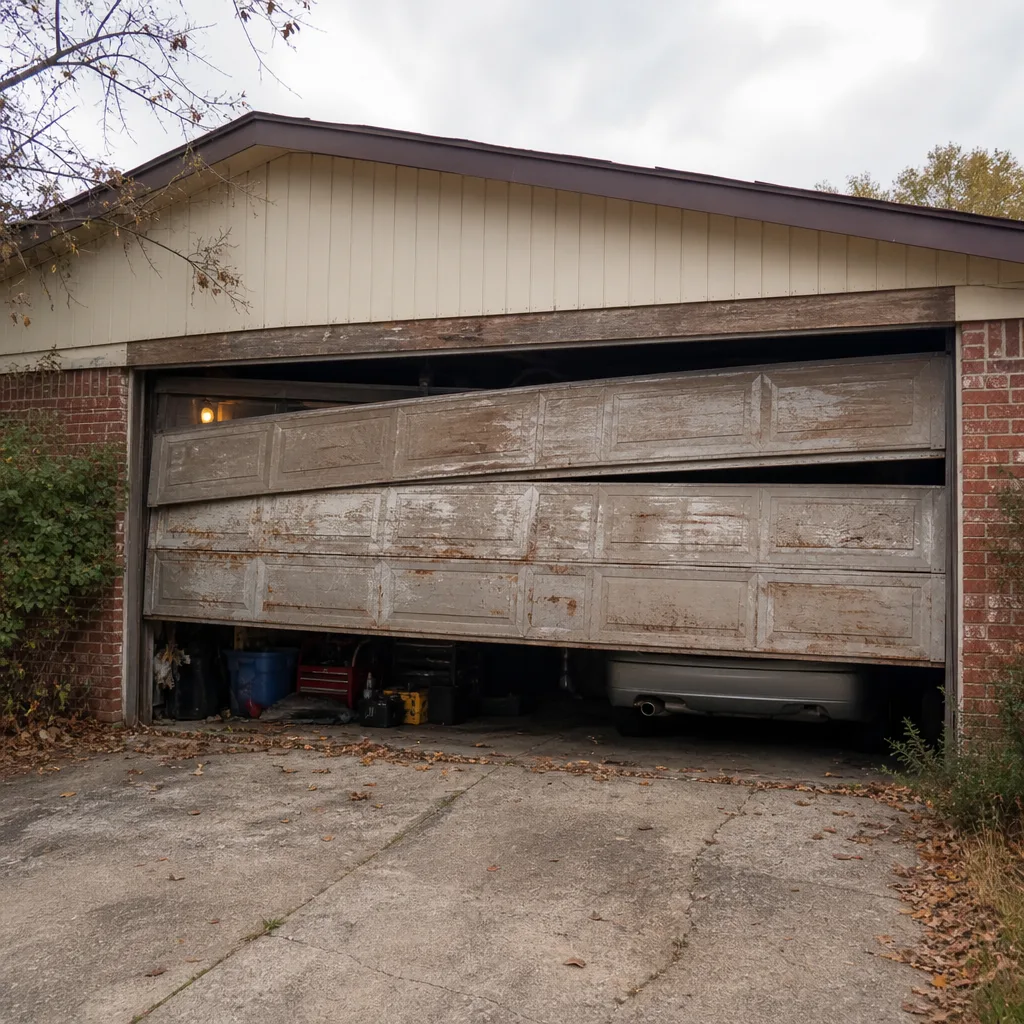 Before
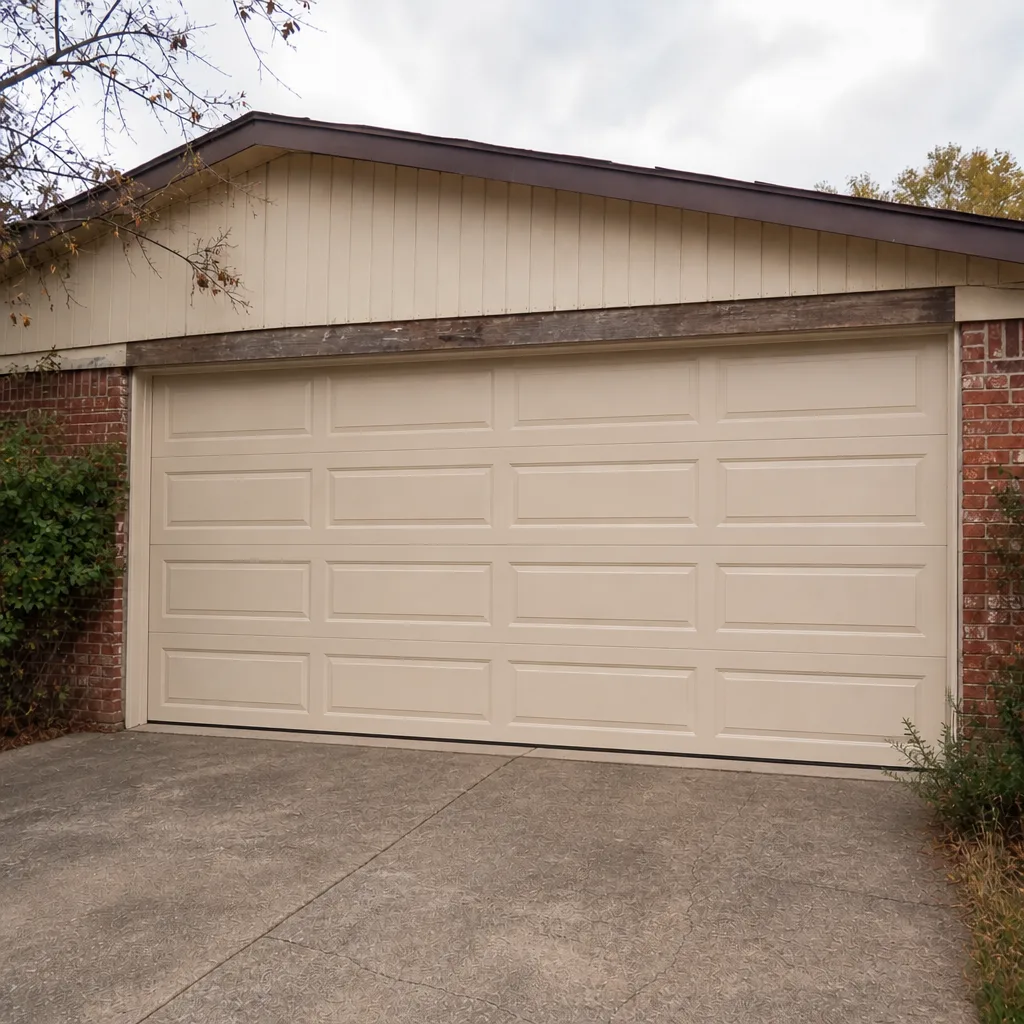 After
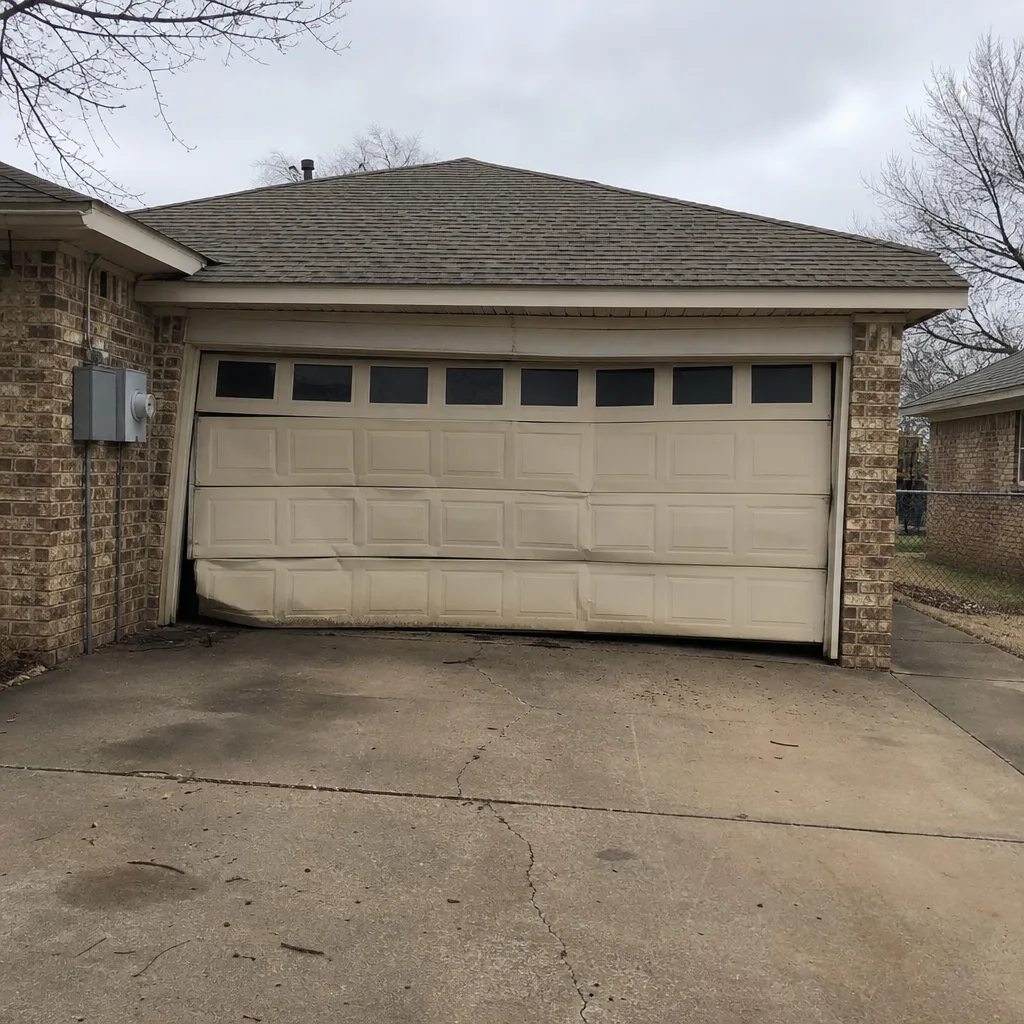 Before
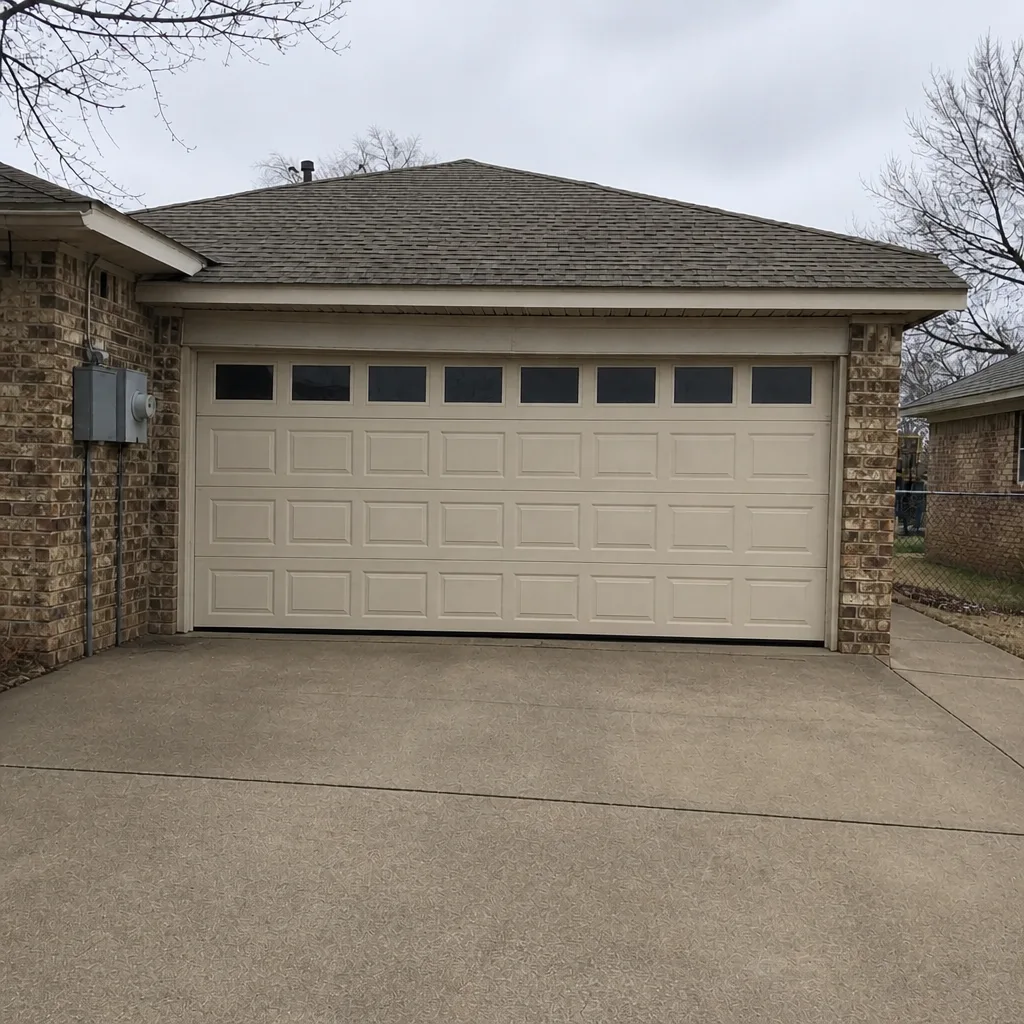 After
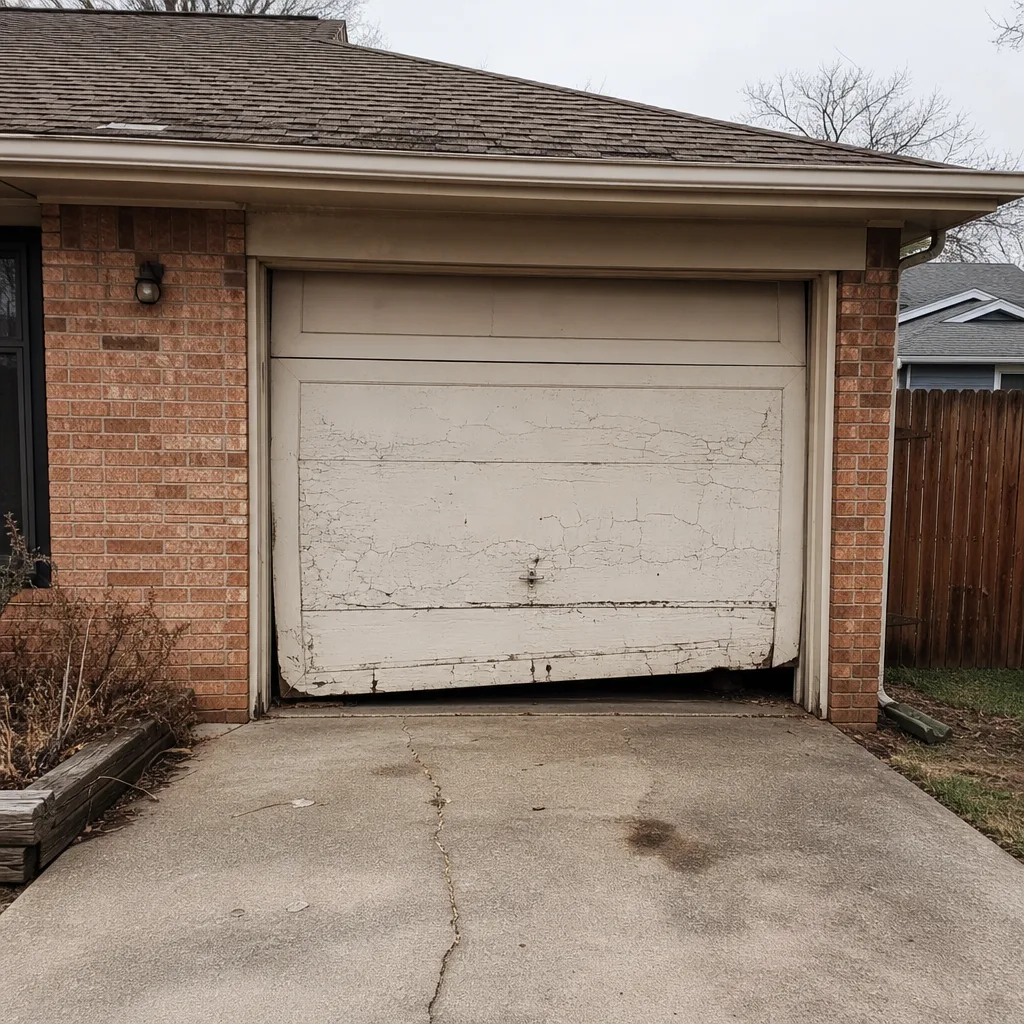 Before
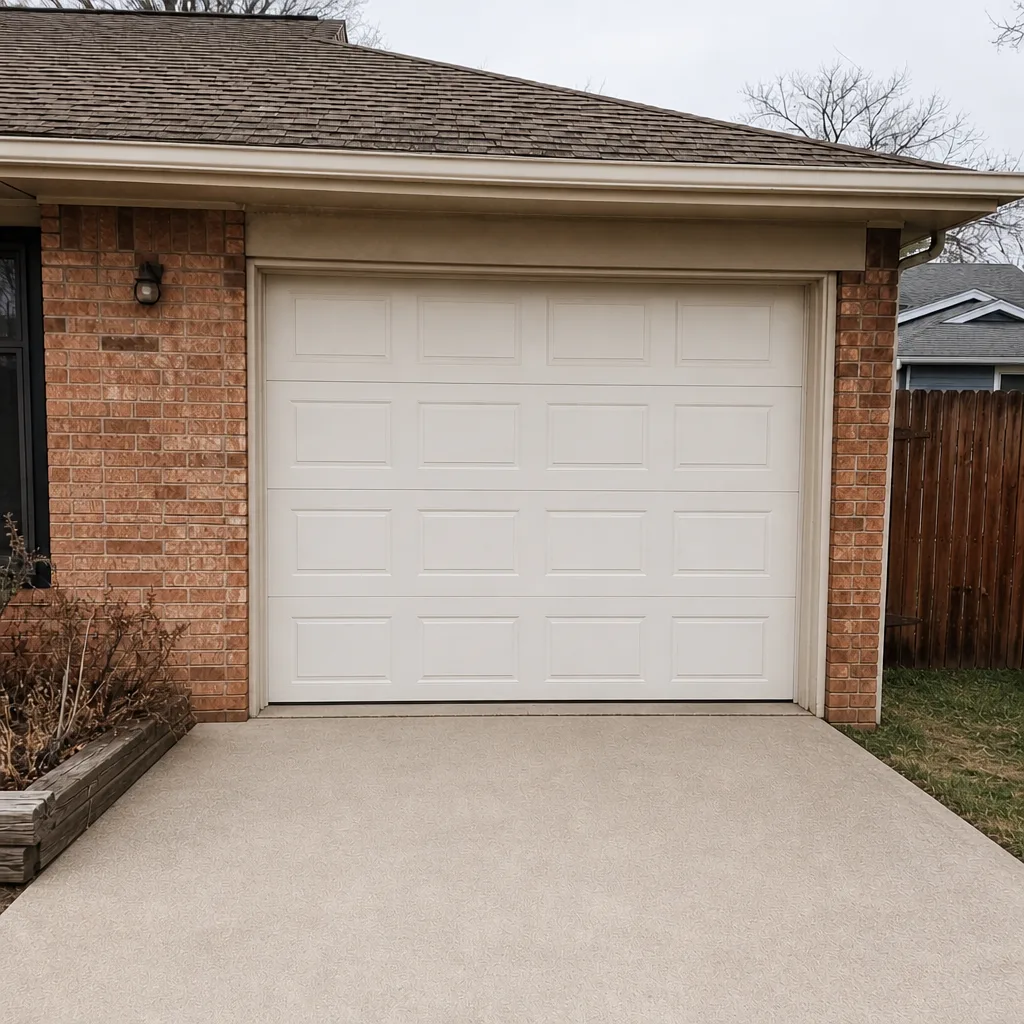 After