
Last updated November 16, 2026
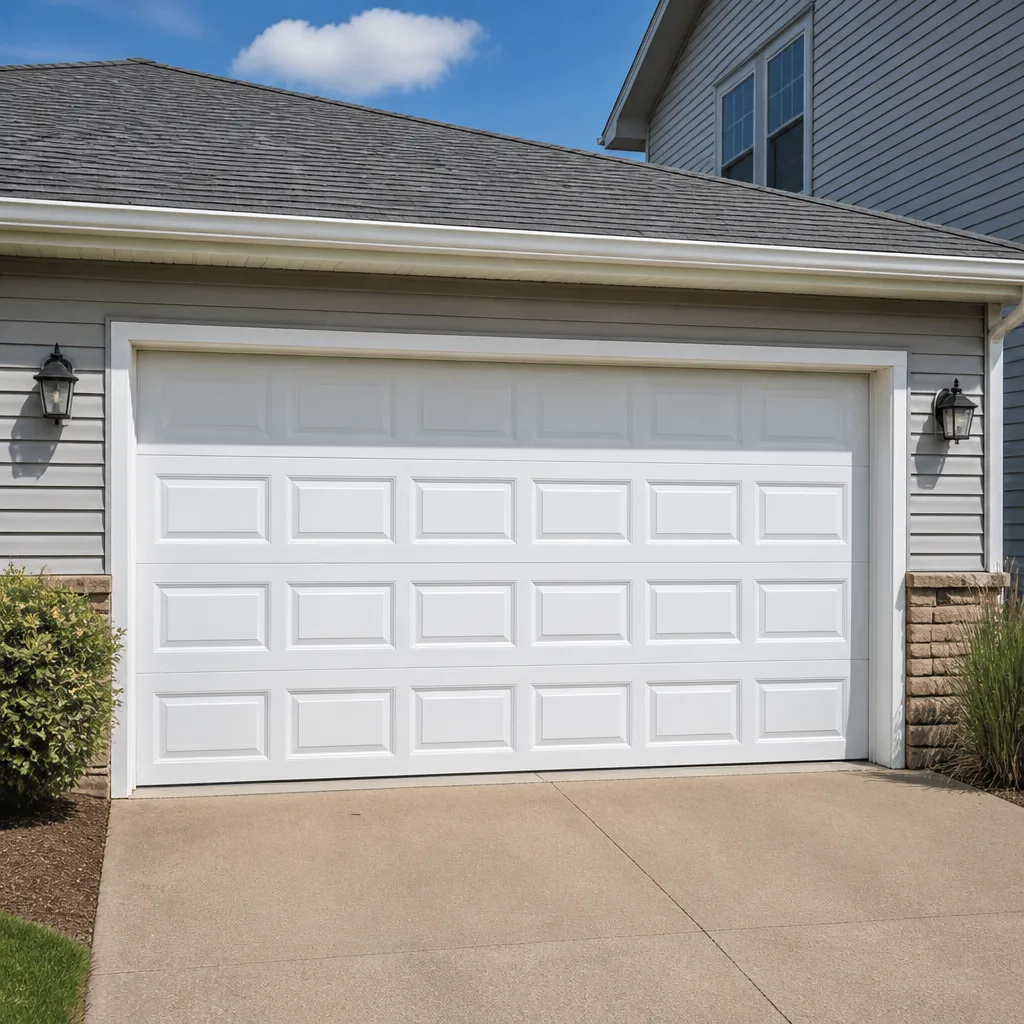 Raised-panel steel
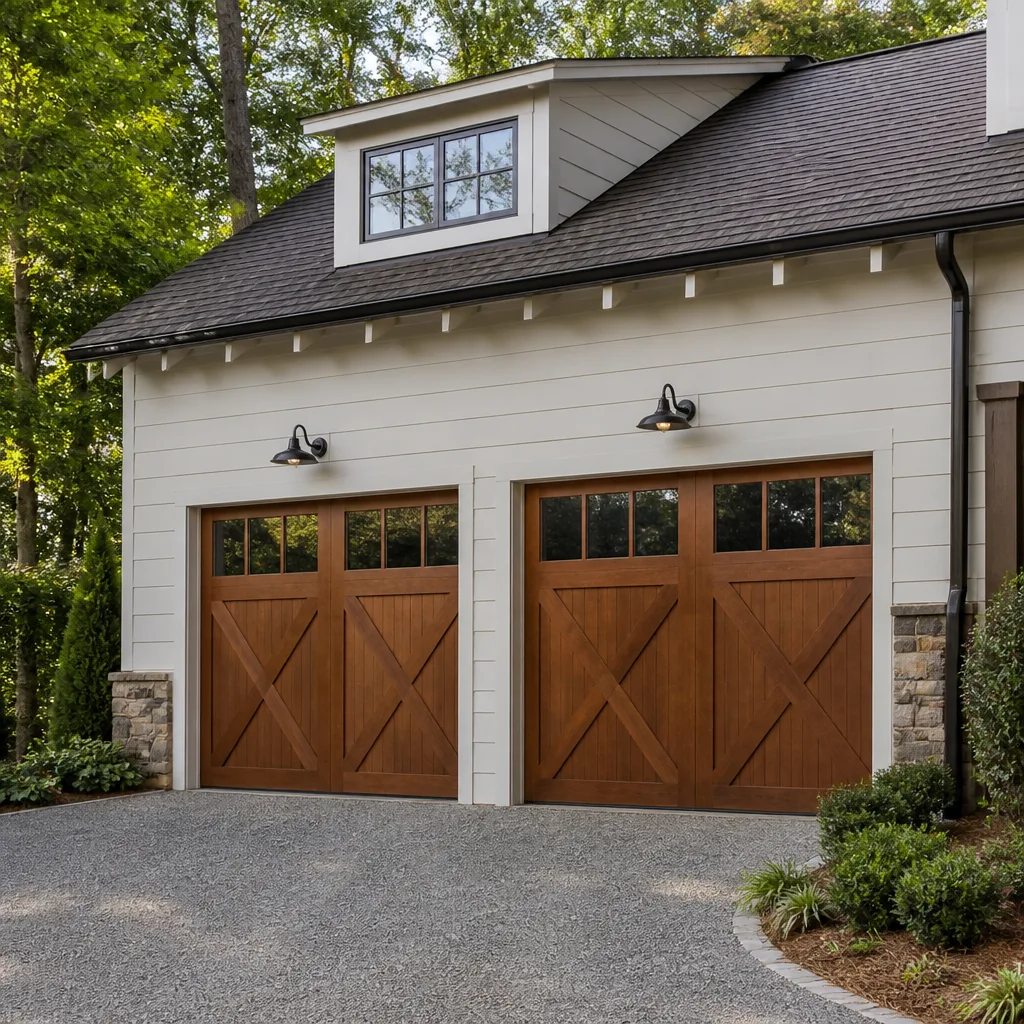 Carriage house
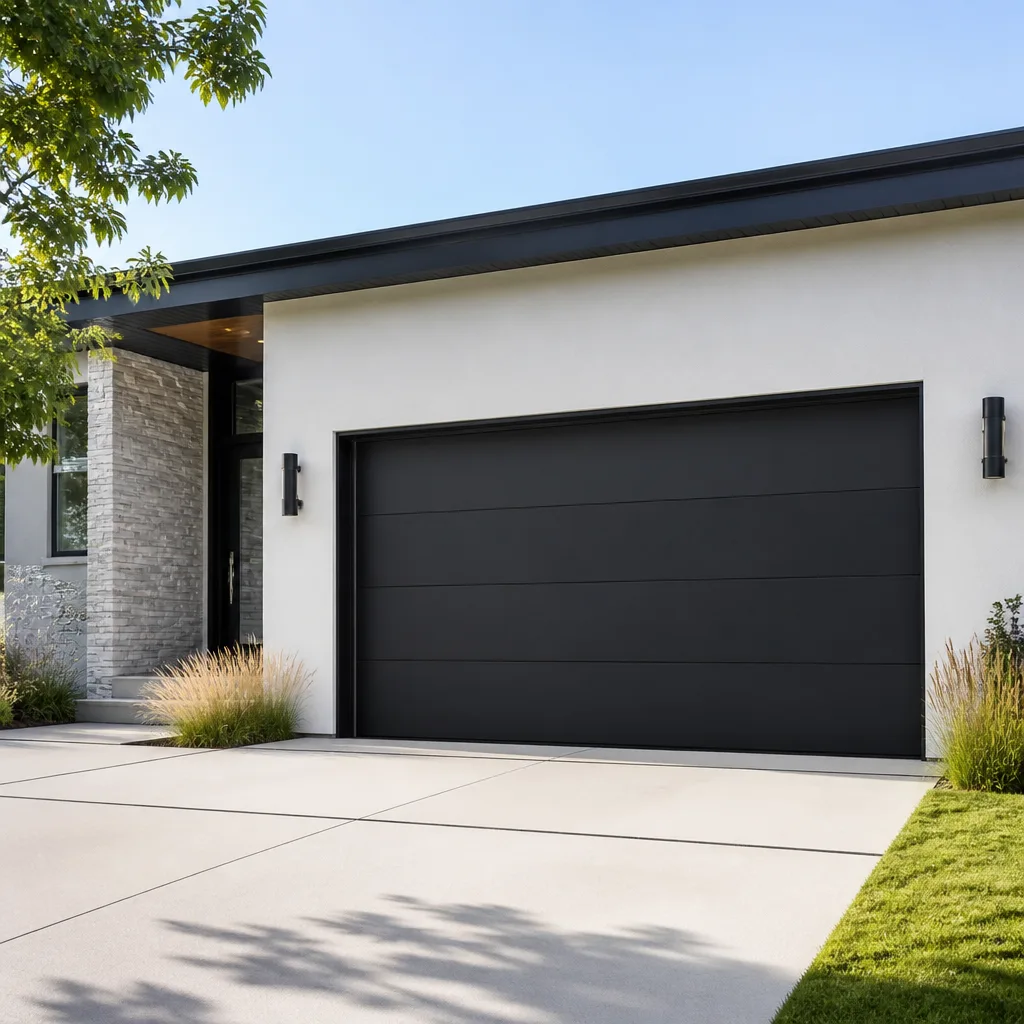 Modern flush
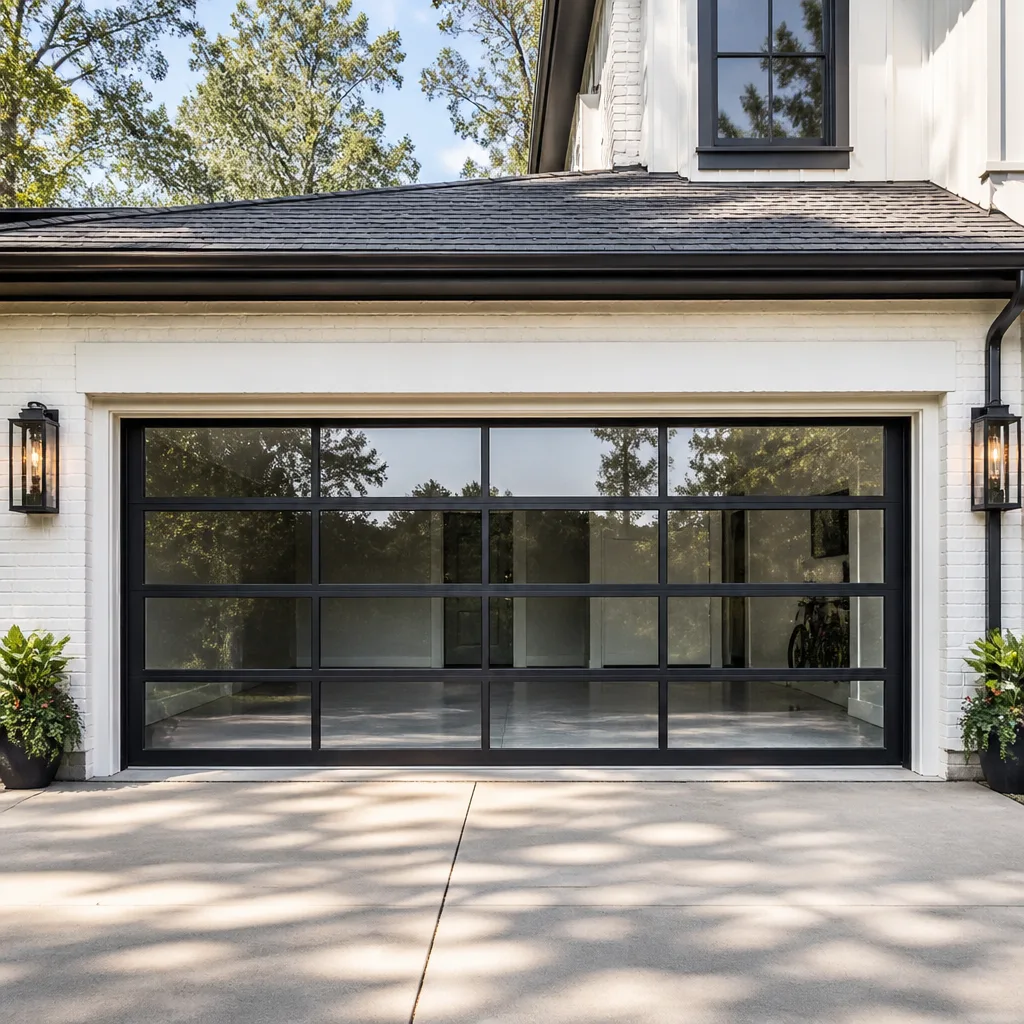 Full-view glass
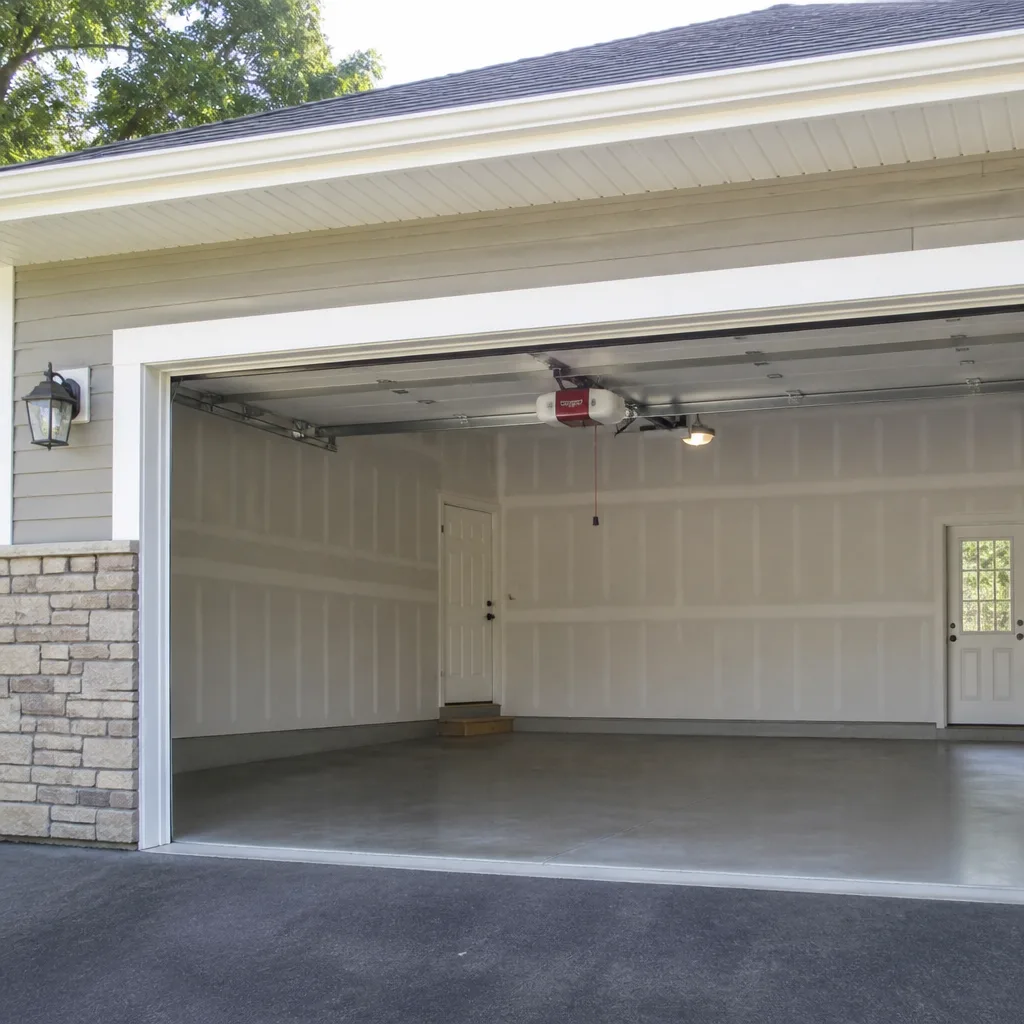 LiftMaster openers
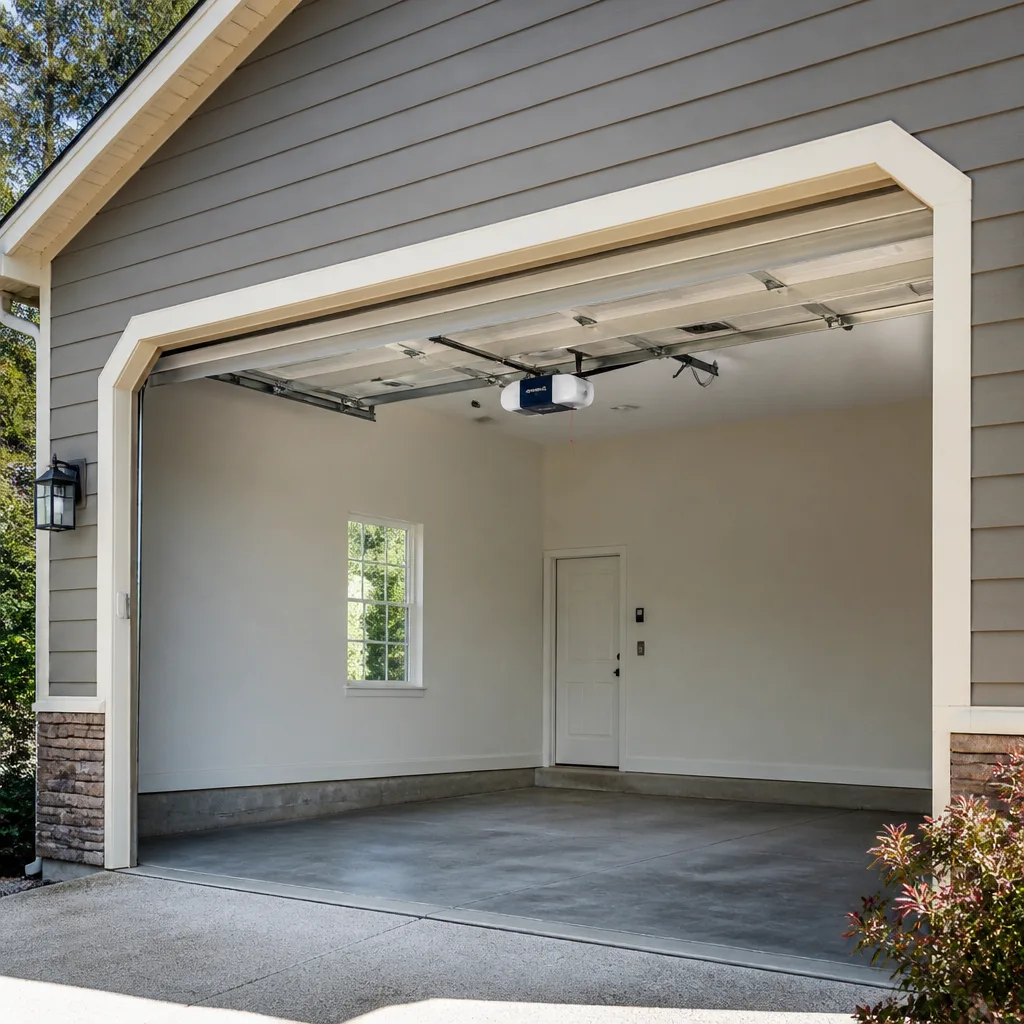 Chamberlain openers
Full 25-point door and opener safety check with every visit - springs, cables, rollers, tracks, and your LiftMaster or Chamberlain opener included
You get a price before we start. It does not change when the pro arrives.
Get your free estimateThe Complete Guide to Garage Doors in Norman
Most garage door guides are written for a hypothetical homeowner in a hypothetical climate. Norman homeowners live somewhere real, and the details matter. You deal with 60°F temperature swings in a single week, clay-heavy soils that move foundations and throw tracks out of alignment, and wind loads that push past what a standard residential door was ever rated to handle. A door that behaves itself in a mild coastal town can rattle, bind, and fail here within a season. This guide treats Norman as its own context. You’ll learn how the local ground and weather shape what breaks, what the door on your house is probably made of, how to read the warning signs early, and how to decide whether a repair, a tune-up, or a full replacement is the right call. We’ll also cover wind ratings that actually apply to central Oklahoma, the two very different sets of problems that show up on older ranch homes versus newer west-side builds, and the annual checks that catch trouble before it becomes an emergency.
Quick Answer
A garage door in Norman typically needs repair, adjustment, or replacement based on three factors: how the clay soil has shifted your frame, how well the door is rated for local wind loads, and how old the springs and opener are. Older ranch homes usually need track realignment and spring replacement; newer homes in fast-growing subdivisions more often need opener tuning and wind-rated hardware upgrades. Most problems are fixable with a service call, and a free written estimate tells you which path makes sense before anything is ordered.
Styles & brands we work with
- Raised-panel steel
- Carriage house
- Modern flush
- Full-view glass
- LiftMaster openers
- Chamberlain openers
Table of Contents
- How Norman’s Clay Soil Moves Your Door Frame
- Wind Load Ratings That Actually Matter in Central Oklahoma
- What Kind of Door Is Already on Your Norman House?
- Two Norman Housing Stories: Older Ranches vs. New Builds
- The Decision Tree: Repair, Tune-Up, or Replace?
- Springs, Cables, and the Parts You Should Never Touch
- Openers and Smart Systems in Norman Homes
- Your Annual Norman Garage Door Checklist
How Norman’s Clay Soil Moves Your Door Frame
The ground under much of Norman is heavy clay that swells when it takes on water and shrinks hard when it dries out. Across a year of wet springs and dry summers, that expansion and contraction works on your foundation and the framing of your garage opening. The building may not crack, but the door’s track and header can shift a fraction of an inch in one direction and then back. Over time, the two vertical tracks that should be perfectly parallel end up slightly out of true.
When that happens, you’ll notice the symptoms before you understand the cause:
- The door rubs or squeals on one side as it travels
- A visible gap between the door panel and the weather seal on one edge
- The door drops faster or slower on one side than the other
- The bottom section scrapes the floor at one corner but clears at the other
- The opener strains or reverses partway up without a clear obstruction
Most homeowners blame the opener. In our experience, the opener is often just reporting a problem the tracks created. A technician adjusts the tracks back to plumb, checks the hinge line, and the door moves cleanly again without touching the motor. If the misalignment is severe, the frame itself may need attention from a foundation or framing specialist first, because adjusting a track against a moving frame just buys you a few months.
What to watch for each year
Walk to the door when it’s fully closed and look down each vertical track with one eye. It should look straight. Then open the door and watch the gap along the top and sides; it should be even all the way across. Run your hand along the bottom seal and feel for drafts at the corners. These three checks take two minutes and catch soil movement early, while the fix is still a minor adjustment rather than a full realignment. If you see new cracks in the concrete apron under the door, that’s a sign the slab is moving and worth a closer look.
Norman’s soil isn’t going to stop moving. The goal is to inspect on a schedule, catch the shift while it’s small, and have a specialist adjust the door back into true before the tracks and rollers take the wear.
Wind Load Ratings That Actually Matter in Central Oklahoma
Every overhead door has a wind load rating, and most homeowners have never looked at theirs. In central Oklahoma, that rating is the difference between a door that holds its shape through a strong storm and one that bows, leaves its tracks, and has to be replaced. Standard residential doors sold in lower-wind markets are often built to hold against roughly 30 to 50 mph gusts. For Norman, you want a door rated higher than that, and you want the rating to be printed on the door’s spec sheet, not implied by the brochure.
What the rating means in plain terms:
- Design pressure rating: a number that states how much wind pressure the door assembly can resist without permanent deformation. Higher is stronger.
- Reinforcement: heavier-gauge steel struts across the door’s back hold the panels flat and spread wind pressure to the hinges.
- Track and anchor specs: a strong door on weak tracks and shallow anchors still fails. The whole assembly has to be rated, not just the panels.
- Section weight: heavier-duty doors weigh more, which means springs sized for that weight. A mismatch causes the door to drop or the opener to strain.
If your existing door’s rating sticker is long gone or you can’t find it in the original paperwork, a technician can measure the door’s weight and construction and tell you roughly what class it’s in. For a replacement, ask specifically for the design pressure rating and have it written into the quote. This is the single most useful number for a Norman homeowner choosing a new door, and it’s the one most often skipped because it isn’t visible from the street.
Why this matters more here than in most markets
Central Oklahoma sits in a region where severe thunderstorms and tornado activity are a real part of the year. A garage door is the largest opening on most homes, and when wind pressure breaks the door, it can let pressure into the structure itself. That’s why the door’s rating is a structural concern, not just a cosmetic one. You don’t need a storm-rated door to live comfortably here, but you do want a door that meets a rating appropriate for the area, installed with the anchors and tracks that rating assumes. If you’re replacing the door, ask about the wind rating and confirm the installer is following the manufacturer’s anchoring spec for that rating. Both facts belong in your written estimate.
What Kind of Door Is Already on Your Norman House?
Walk down any street in Norman and you can roughly date the homes by their garage doors. That matters because the door already on your house tells you what you’re likely to face at repair or replacement time.
Sectional steel doors (the most common across Norman)
The vast majority of homes in Norman have a sectional steel door: horizontal panels linked by hinges and riding on two vertical tracks and a curved upper track. Steel dominates for good reason. It’s strong, holds a wind rating well, and takes paint. Common brands you’ll see are Clopay, Amarr, and Wayne Dalton. Most repairs on these doors are springs, rollers, hinges, and cable issues rather than the panels themselves, which means a fairly inexpensive fix even on an older door.
Older wood and wood-composite doors
Some mid-century and 1970s ranch homes still carry wood or composite panels. Wood doors tend to come with the older ranch properties in the central and older neighborhoods, where the original build predates steel’s dominance. These doors need more attention: paint, sealing, and periodic hardware tightening. They’re also heavier than a comparably sized steel door, so if someone before you swapped in lighter springs, the door will drop hard when you release the opener. That’s a warning sign of a spring mismatch, which is one of the most common problems we run into on older Norman homes.
Insulated steel with a carriage-house face
Newer builds and renovation projects favor insulated steel doors with a carriage-house or contemporary face. These combine the strength and wind rating of steel with the look of wood. They’re the default choice on most replacement decisions in Norman today because they handle the local wind and temperature demands well and won’t swell or split in the changing seasons. If you’re upgrading for curb appeal, this is the category most Norman homeowners end up choosing, and the door manufacturers behind it (Clopay, Amarr, Wayne Dalton, Raynor) all offer panels rated for central Oklahoma conditions.
Two Norman Housing Stories: Older Ranches vs. New Builds
Norman’s housing stock splits into two broad groups, and each one produces a different set of garage door problems. Knowing which group your home is in saves you money on the wrong fix.
The older ranch homes
Across older Norman neighborhoods, many homes were built in the decades when a garage door was expected to last forever and nobody was thinking about wind ratings. Those doors are often original or have been replaced once. What we find on these:
- Sagging or misaligned tracks from decades of soil movement, exactly as discussed above
- Worn rollers and hinges that grind and squeal on every open
- Springs at the end of their usable life, especially if the door has been opened thousands of times
- Undersized or original openers pulling a heavier door than the motor was built for
- Weather seals worn thin, letting in drafts, moisture, and insects
The good news: none of these require replacing the door. Most older Norman ranch doors are still structurally sound and just need the hardware refreshed. A tune-up and spring replacement can add many years of service to a door that looks far older than it actually is.
The newer west-side builds
The newer subdivisions, especially on Norman’s growing west side, tend to have insulated steel doors from the start, often with a modern opener integrated into a smart-home setup. Here, the problems are different:
- Opener connectivity and programming issues on smart systems, especially after a power event
- Doors built to a wind rating that wasn’t correctly anchored by a subcontractor who installed it fast
- Springs matched for a lighter door than the final panel weight when the builder swapped specs late
- Weather seals that pull loose because the door is tight against framing that has since moved
- Track adjustment needed after a few years of the same clay movement happening to a newer slab
If you live in one of the newer west Norman subdivisions, the first thing we’d check is whether the door’s rating matches its anchors. A door that has the right rating but wasn’t bolted down with the manufacturer’s anchor spec is effectively under-rated. That’s a quick inspection, and it’s worth doing once rather than finding out in a storm.
The Decision Tree: Repair, Tune-Up, or Replace?
This is the question every Norman homeowner actually wants answered: should I fix this door or replace it? Use this decision tree as a starting point, then confirm with a technician’s in-person look.
- If the door is 15 years old or less and the only problem is a broken spring, a bad opener, or worn hardware: repair it. These are components, not the door itself. Replacing a 10-year-old door because a spring broke is the most common unnecessary expense we see.
- If the door is older but the panels are straight and the frame is stable: do a tune-up. New springs if needed, new rollers and hinges, track adjustment, seal replacement. A tuned older door is a perfectly good door.
- If the door is sagging, has rust-through, or the panels have taken damage from a vehicle or a storm: replace it. Patching a structurally failed door is not a good use of money.
- If the door’s wind rating is unknown or too low for central Oklahoma and the door is otherwise sound: this is a judgment call. A technician can add reinforcement and re-anchor the existing door in some cases; in others, a replacement is the cleaner answer.
- If you’re replacing it for curb appeal: go for a modern insulated steel door with a rating that fits the area. It usually improves the home’s appearance and its storm resilience at the same time.
One rule of thumb that holds up
Add up what the repair would cost, then ask whether the door has more than a handful of good years left. If the answer is yes, repair. If the repair is close to the cost of the door itself and the door is failing structurally in more than one place, replacement is usually the honest call. We’ll tell you which one makes sense before we order any parts, and the parts decision always follows the written estimate so you’re not surprised by an invoice.
Springs, Cables, and the Parts You Should Never Touch
Torsion springs, extension springs, and the cables that run between them store enormous energy. When a torsion spring lets go, it releases that energy in an instant, and when a cable snaps under tension, it can whip across the garage. These are not parts a homeowner should try to adjust, release, or replace. Even with the door closed and the opener disconnected, the springs are under load and the danger is real.
What you should know instead is how to spot the signs that a spring or cable is failing:
- A loud bang from the garage, followed by the door becoming very heavy to lift or refusing to open
- A visible gap in the torsion spring coil (look for a break in the winding)
- An extension spring stretched unevenly or clearly detached
- A cable hanging slack or off its drum
- The door opening crooked, with one side lifting while the other lags
If you see any of these, stop using the opener and don’t try to force the door. Call for service instead. A trained technician can release the tension safely, replace the spring (or the matched pair, usually, since both springs have taken the same wear), and reset the door’s balance. A technician will also check the door’s actual weight against the spring rating, which is one of the most common fixes on older Norman homes where a previous owner swapped in springs that were close but not right. The door should lift with modest effort by hand and stay put at the halfway point. If it doesn’t, the springs aren’t matched to the door, and the opener is doing the extra work.
When the opener isn’t the problem
A surprising number of “broken opener” calls turn out to be a spring or cable problem. The motor runs, the door doesn’t lift, and the homeowner assumes the motor is shot. Before anyone replaces an opener, the door’s balance and hardware should be checked. Replacing the opener on a door with a failing spring just leads to another failure soon after.
Openers and Smart Systems in Norman Homes
Most openers we see on Norman homes are LiftMaster, Chamberlain, Genie, or Craftsman, sometimes a Wayne Dalton or Raynor matched to the door it was installed with. Each brand has its own quirks, its own programming sequence, and its own approach to smart-home integration, so a technician who works on all of them is a practical advantage over one who only knows a single brand.
What tends to go wrong
- Travel limits drift after years of use or a power event, so the door reverses early or stops short
- Safety sensor misalignment after the garage framing shifts or a sensor gets bumped; the door won’t close and blinks at you
- Gear and sprocket wear on older chain-drive units, producing a grinding sound
- Smart-home connectivity drops after a router change or firmware update, leaving the app unable to reach the opener
- Battery backup aging out so the opener won’t work in a power outage
For smart-home issues, the fix is usually in the opener’s programming rather than the door, and a technician who knows the brand can walk through the setup quickly. For the safety sensors, a service call usually resolves the issue in one visit by re-aligning the sensors and confirming the door reverses correctly when tested. If the opener is very old and the parts aren’t made anymore, that’s when a replacement makes more sense than a repair, and we’ll say so plainly rather than keep patching it.
Opener replacement considerations in Norman
If you’re replacing an opener, the door’s weight and spring type come first. A belt-drive opener is quiet and popular for homes with bedrooms near the garage; a chain-drive is sturdy and long-lived; a jackshaft opener suits a low-clearance or high-lift situation. Whatever you choose, the opener’s lift rating must match the door, and the safety sensors must be in place and working before anyone uses the door. For a fuller look at opener-specific problems, see our garage door opener repair page.
Your Annual Norman Garage Door Checklist
A once-a-year check of your door, timed for just before the storm season, is the best way to avoid a broken-door emergency. Nothing on this list requires touching the springs or cables.
- Inspect the tracks by eye. With the door closed, look down each vertical track. It should be straight; if one is visibly bowed or the door rubs on it, that’s a call.
- Check the door’s balance. Disconnect the opener and lift the door to halfway by hand. It should lift with modest effort and hold there. If it drops or takes real muscle, the springs need attention.
- Look for cable and spring wear. Check for a break in the torsion coil, a slack cable, or an extension spring stretched unevenly. If you see anything, stop using the door.
- Feel the bottom seal and corners. A cold draft or visible light around the bottom edge means the seal or the door’s alignment has changed.
- Watch the door’s travel. Open and close it and listen. Squeaks, grinding, or a slow side on one edge all point to worn rollers or a track out of true.
- Test the safety reverse. Put an object in the door’s path and watch whether the door reverses when it contacts it. If it doesn’t, the sensors or travel limits need a technician.
- Look at the concrete apron under the door. New cracks in the slab or a door that suddenly drags along the bottom edge suggest the slab or frame has shifted.
If everything checks out, your door is in good shape for another year. If any check fails, that’s what a service call is for. Running through this list costs nothing, and the earlier you catch a small alignment issue, the cheaper it is to correct.
Common Mistakes to Avoid
- Blaming the opener when the door is the problem. A straining opener often means a worn spring or a misaligned track. Replacing the motor before checking the door wastes money and the new motor will fail the same way.
- Lubricating the tracks. A common DIY move that makes things worse. Tracks and rollers on most doors are meant to run dry or use a specific lubricant. Grease on the tracks collects grit and makes the door drag.
- Buying a replacement door without checking its wind rating. In central Oklahoma, the design pressure rating matters. A cheaper door with a low rating is a false economy here.
- Replacing one spring of a matched pair. Both springs wear the same way. Replacing one leaves the other close to failing, and the door often loses its balance within weeks. Have the pair done together.
- Adjusting the torsion spring yourself. This is the most dangerous mistake on the list. Springs are under enough tension to cause serious injury. Leave that to a trained technician.
- Ignoring a shifting track after soil movement. Norman’s clay moves the frame whether you notice or not. A small track adjustment after a wet-to-dry spring is a quick fix; waiting until the door’s rollers are worn flat is a bigger one.
- Skipping the annual seal check. A worn weather seal lets in moisture and pests and, over time, can lead to a sagging bottom panel. It’s the cheapest part on the door and the one most often missed.
See the difference
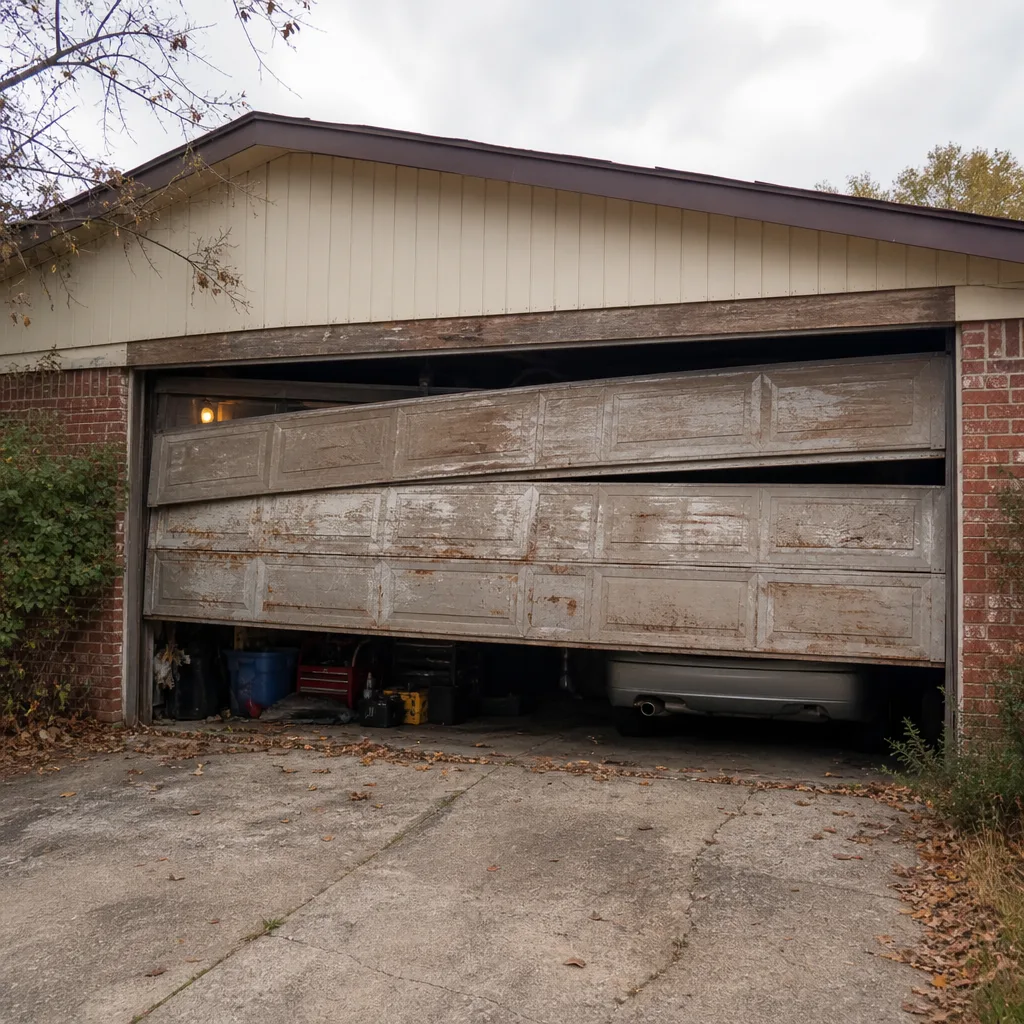 Before
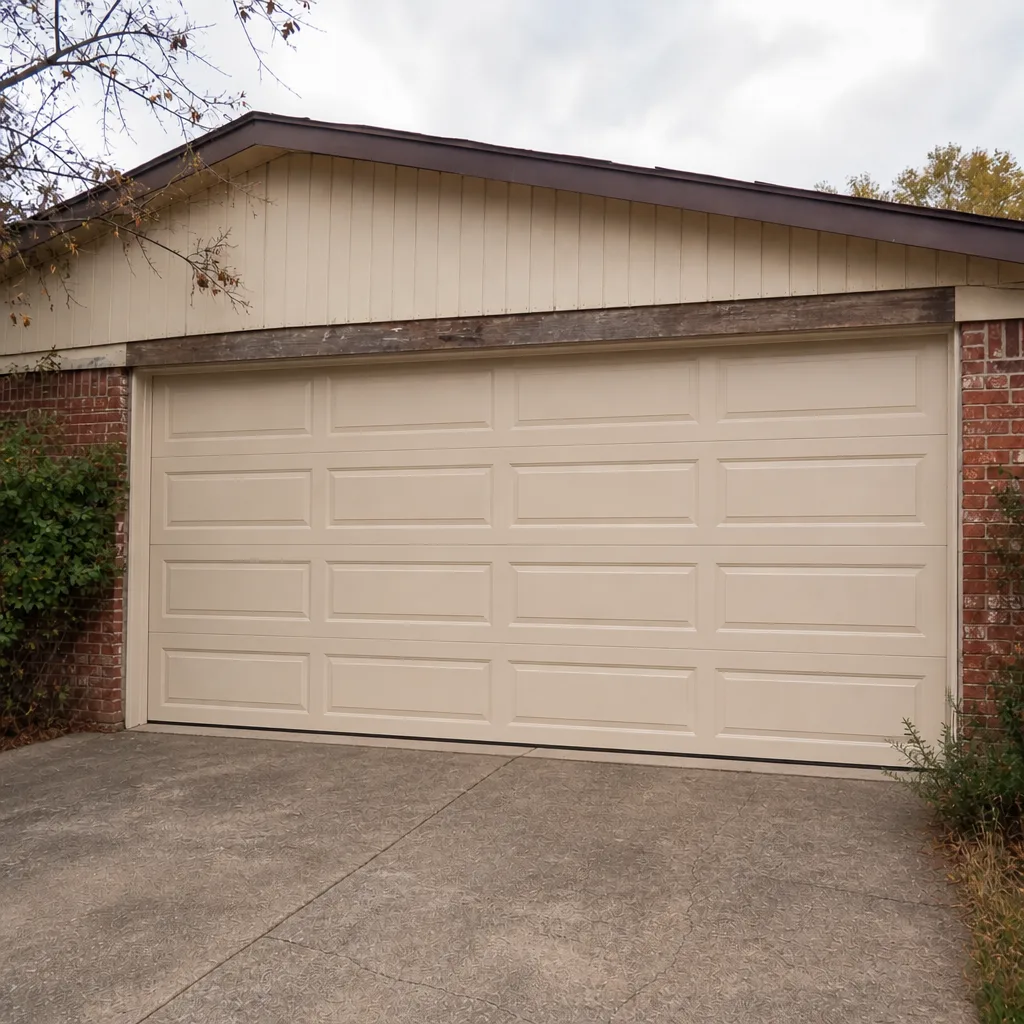 After
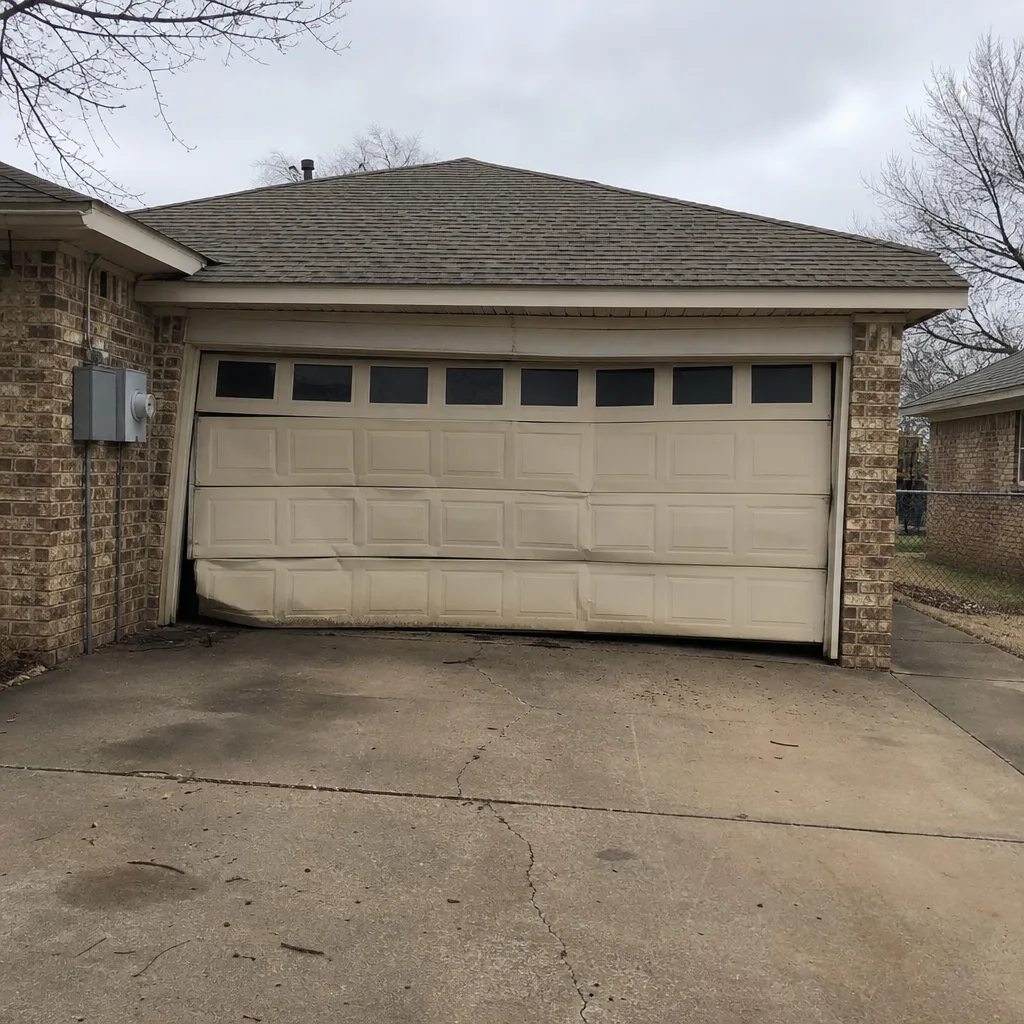 Before
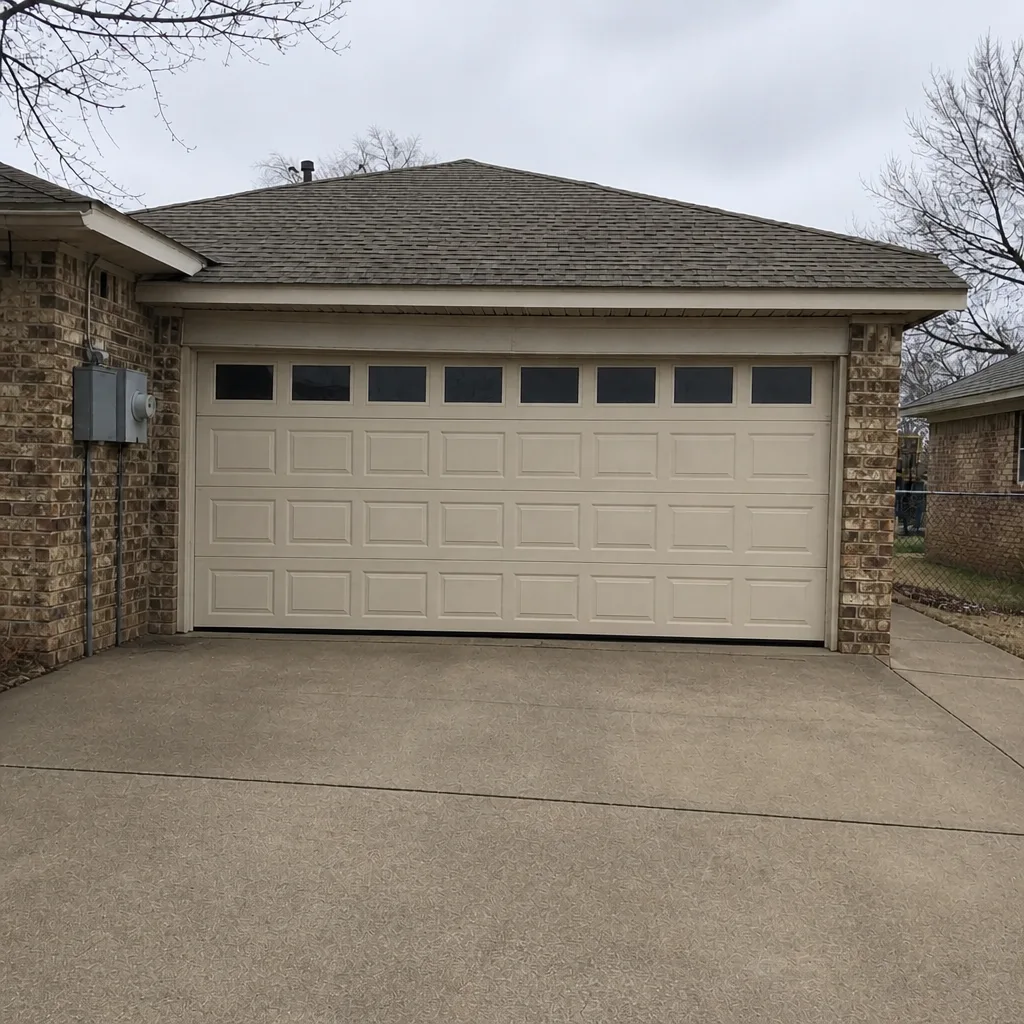 After
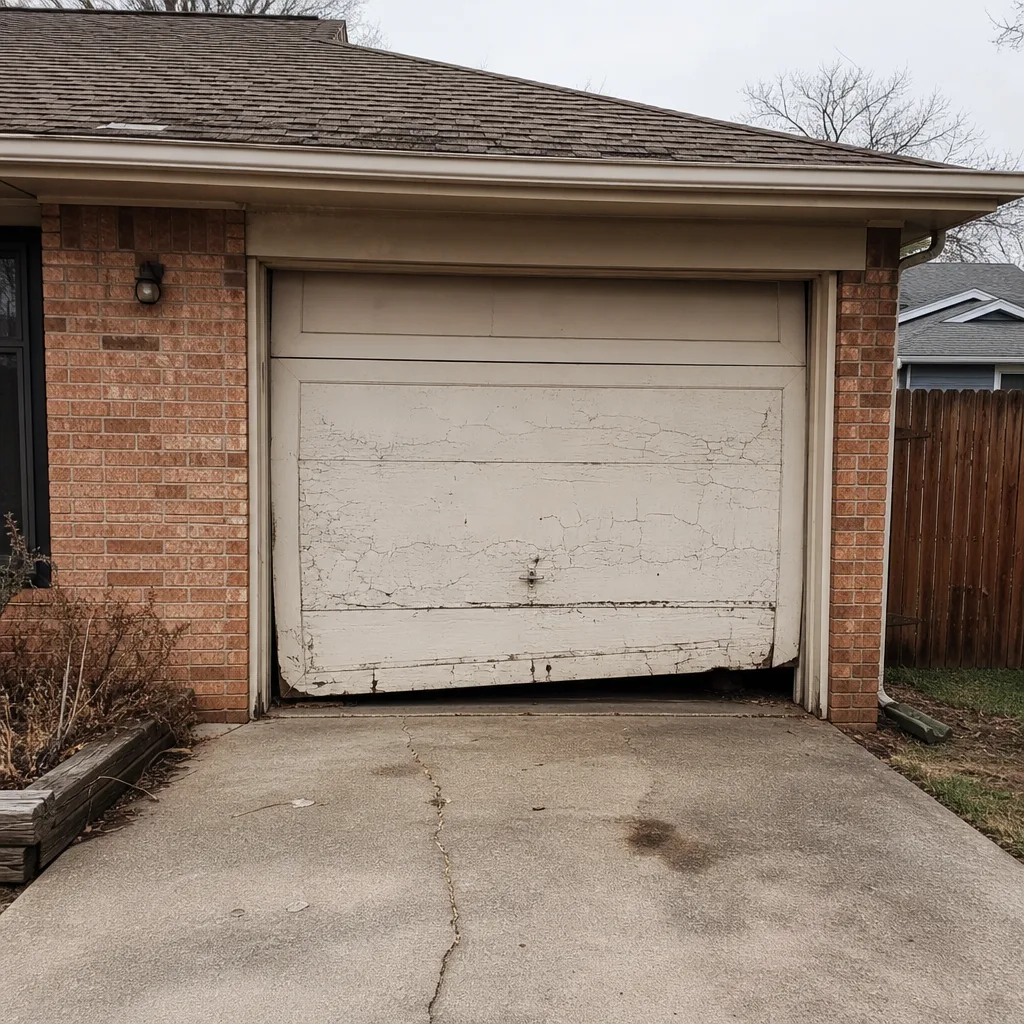 Before
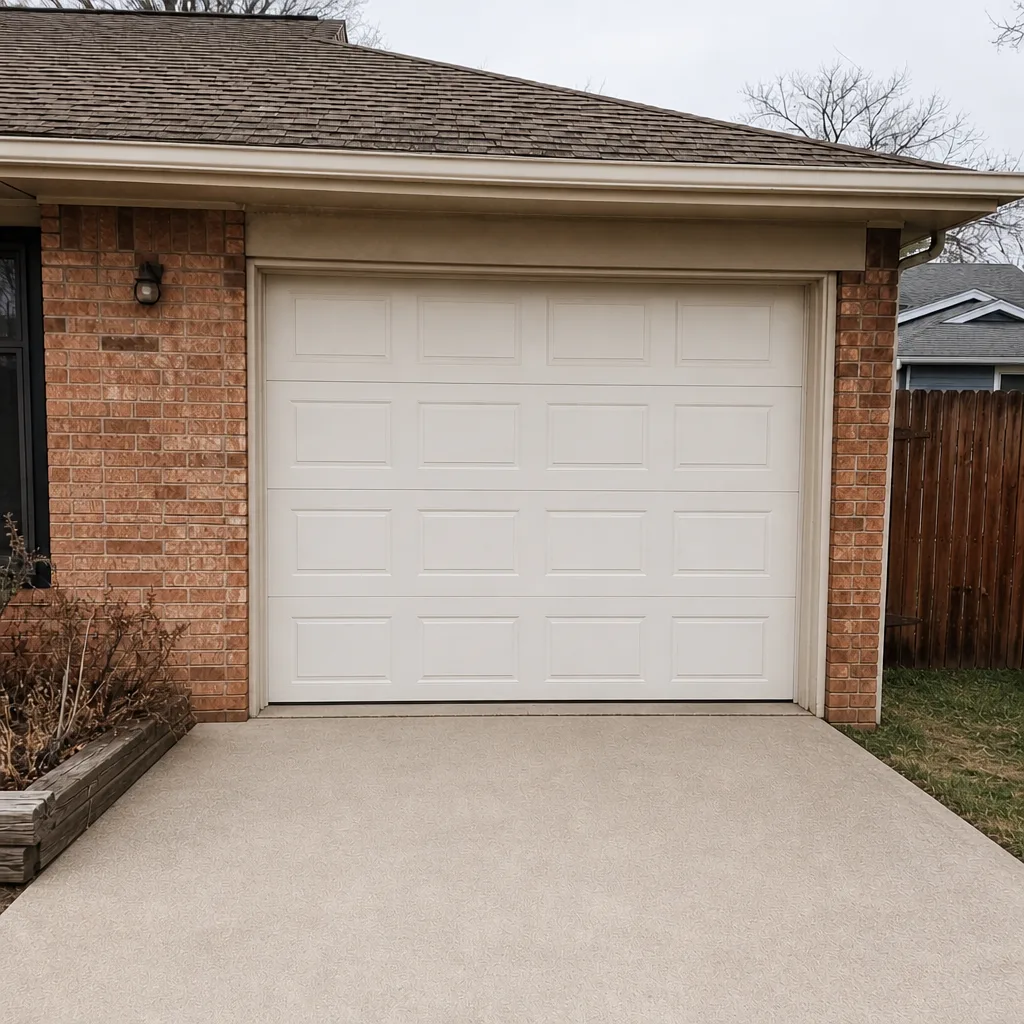 After
When to Call a Professional
Some garage door work is a genuine safety concern, and it’s worth drawing a clear line. Call a trained technician for: a broken torsion or extension spring, a slack or off-drum cable, a door that won’t stay closed or won’t open at all, a track that is visibly bent or broken, an opener that strains or reverses for no clear reason, and any job that involves adjusting or releasing a torsion spring. Also call for a new door or opener installation; that work involves the door’s weight, spring sizing, and wind-rating spec, all of which get worked out before the door arrives.
For routine tune-ups and inspections, a professional visit is worth it once a year because it catches the small problems early. If you’re not sure whether your issue is a component or the door itself, the honest answer is the one a specialist can give you in person rather than the one a catalog can give you over the phone.
Millbrook Garage Door Repair offers free estimates in Norman. Call (866) 942-8099. We answer 24/7. Fast dispatch from 7am to 7pm, Sunday through Friday. If you’d like more detail on the repairs we handle, see our garage door repair page, or read about the Norman area we work throughout.
Frequently Asked Questions
Repair is the right call when the door’s panels are straight and the frame is stable, and the failure is a spring, opener, roller, or hinge. Replacement makes more sense when the door is sagging, rusted through, structurally damaged, or has an unknown wind rating that doesn’t suit central Oklahoma. A free written estimate confirms which path makes sense before anything is ordered.
The clay soil under much of Norman moves with wet and dry seasons, and that movement shifts the framing around the door opening. The two vertical tracks drift out of parallel, and the door starts binding or dropping on one side. An annual check catches the shift while it’s still a small adjustment rather than a full realignment.
It should be higher than the lowest residential ratings, because central Oklahoma sits in a strong-wind region. Look for the design pressure rating on the door’s spec sheet and ask that it be written into the estimate. The rating also assumes correct anchors and tracks, so the whole assembly has to be installed to spec, not just the panels.
Same-day repair is often possible for Norman homeowners. We answer 24/7, and a call outside dispatch hours is booked into the next opening, Sunday through Friday, 7am to 7pm. Call (866) 942-8099 for the fastest response.
Usually not. Smart openers like LiftMaster, Chamberlain, Genie, and Craftsman often lose their app connection after a router change or firmware update, and the fix is in the opener’s programming. A technician who works on those brands can reconnect it without replacing anything. If connectivity issues persist alongside mechanical symptoms, we’ll check the whole system.
Yes. Our technicians are licensed and insured, and our technicians have up to 11 years of experience working across the major garage door and opener brands. We confirm the price in a written estimate before any work starts, so there’s no surprise on the final invoice.
The Bottom Line
Garage doors in Norman fail for reasons that are specific to this place: clay soil that moves the frame, wind loads that stress the panels, and a housing stock that splits into older ranches and newer west-side builds with different needs. The practical takeaway is simple. Check your door once a year for track alignment, balance, and seal gaps. Never touch a torsion spring or a tensioned cable. When something breaks, get a diagnosis before you spend money on parts, because the opener is often the messenger rather than the problem. Whether you end up repairing, tuning up, or replacing, match the door’s wind rating to central Oklahoma conditions and confirm the price in writing before work begins. For a free written estimate, call Millbrook Garage Door Repair at (866) 942-8099. We answer 24/7, with fast dispatch from 7am to 7pm, Sunday through Friday.
If you want to know more about how we work on the brand you already have, see Millbrook Garage Door Repair.
Written by the team at Millbrook Garage Door Repair.